
Professional Security Guards: Boosting Gated Community Property Values
Written by: Greg Peters – Military Veteran & Owner of International Security Services
Professional security guards increase property value in gated communities by reducing crime, improving resident confidence, and enabling measurable financial benefits through insurance savings and enhanced marketability. This article explains the causal links between guard-led security programs and property appreciation, describes the specific services that deliver value, and provides actionable guidance for HOA boards and property managers pursuing measurable returns. Many HOA leaders face rising package theft, parking violations, and liability exposure that harm perceptions of safety and slow sales; professional guards address these pain points with access control, visible patrols, and documented incident response. After a concise positioning of local expertise, the article maps the evidence and implementation steps that boards need to make informed investments. International Security Services, a veteran-owned security firm based in Flower Mound, Texas, is positioned here as a local example of these best practices and their gated community offering is referenced where relevant as a practical model. The sections that follow detail the causal link, service breakdown, financial impacts, tailoring guidance, local DFW results, and the case for long-term investment.
What Is the Link Between Professional Security Guards and Property Value in Gated Communities?
Professional security guards link to higher property values by reducing measurable risks, improving buyer perceptions, and creating documented evidence that underwrites insurance and marketing claims. The mechanism is straightforward: visible, verified security presence deters opportunistic crime, frequent patrols catch maintenance issues early, and formal reporting creates data that underwriters and buyers trust. As a result, communities with consistent guard programs often experience lower incident rates, shorter time-on-market for listings, and the ability to promote safety as a premium amenity. These channels—crime deterrence, insurance reductions, marketability, and resident satisfaction—work together to raise both perceived and appraised value, as described further in the next subsections.
How Do Security Guards Deter Crime and Enhance Resident Safety?
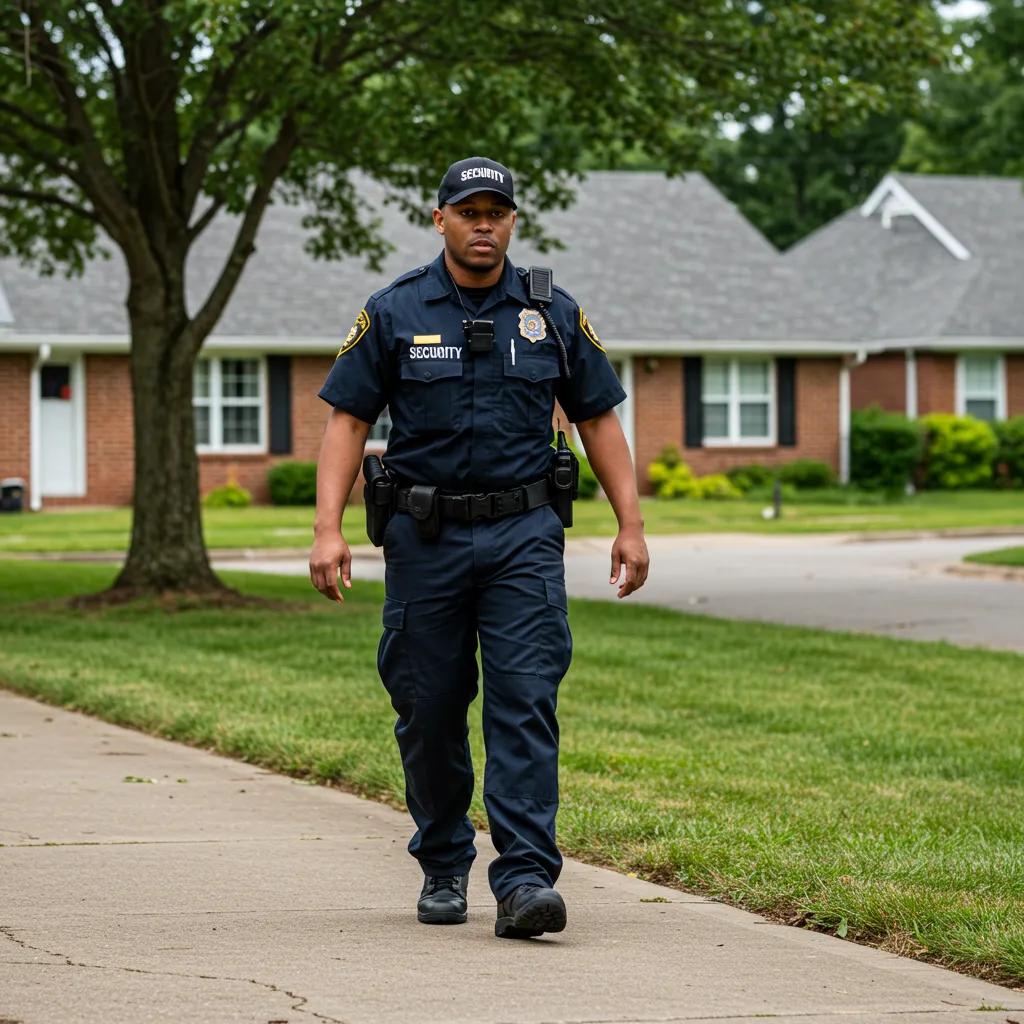
Security guards deter crime and enhance resident safety through visibility, predictable patrol patterns, and proactive access control that reduce opportunities for theft and vandalism. A trained officer on foot or in vehicle patrol provides immediate situational awareness, which discourages trespassers and opportunistic criminals who prefer low-risk targets. Patrol logs and GPS-verified tour data serve as both a deterrent and a source of measurable outcomes that boards can use when tracking incident trends and demonstrating risk reduction. The virtual-reality guardianship study supports the idea that visibility and presence of a “guardian” increase perceived risk for criminals and reduce the attractiveness of a target. Regular patrols also identify maintenance hazards—like broken lighting or overgrown landscaping—that affect both safety and curb appeal, which reinforces resale value by preserving the community’s appearance.
In What Ways Does Security Reduce Insurance Costs for HOAs and Residents?
Security measures influence insurance underwriting by lowering the frequency and severity of property and liability claims, which can translate into premium discounts when documented properly. Insurers evaluate risk using incident rates and mitigation measures; combining gates, trained guards, cameras, and good lighting typically produces the strongest underwriting case. HOAs that maintain incident logs, patrol verification, and a written security program can present this evidence during renewal negotiations to pursue discounts or more favorable terms. Clear documentation and a history of sustained security activity are essential because insurers value consistent risk management over ad-hoc interventions, which leads into how specific guard services deliver measurable value.
How Security Guards Impact Gated Community Property Values
Professional security guards deliver value by executing core services—access control, patrols, rule enforcement, and technology-enabled reporting—that together reduce risk, preserve amenities, and generate marketable evidence of safety. Guards serve as the operational arm of a broader security program, implementing visitor verification, managing gate operations, conducting scheduled and random patrols, and responding to incidents with trained procedures. Technology integrations such as GPS patrol verification, tour tags, and camera monitoring enhance guard effectiveness by creating auditable records and enabling faster incident triage. Below are practical breakdowns of how each service contributes to safety, resident confidence, and property value.
What Role Does Access Control and Visitor Management Play in Property Value?
Access control and visitor management reduce unauthorized entries and support a perception of exclusivity that many buyers are willing to pay a premium for. Guards implementing robust visitor checks, credential verification, and gate procedures prevent tailgating and deter casual trespass, directly lowering theft and nuisance incidents. A documented visitor-management program—complete with logs and incident reports—becomes a marketing asset, allowing listings to advertise a clearly enforced, secure environment. Consistent access-control practices also maintain a community’s brand as private and well-governed, which supports higher list prices and attracts buyers seeking controlled environments.
How Do Visible Patrols and Rapid Incident Response Improve Community Safety?
Visible patrols and fast-response protocols limit the escalation of incidents and reduce property damage by intervening early and coordinating with emergency services when needed. Regularly scheduled and randomized patrols create uncertainty for potential offenders while ensuring hazards are identified and addressed before they degrade the property. Rapid incident response cuts the window for theft or vandalism, preserves evidence through timely documentation, and increases residents’ perception that security problems are handled professionally. GPS patrol verification and digital reporting systems reinforce accountability and generate data that HOAs can utito demonstrate improved outcomes to insurers and prospective buyers.
How Does Rule Enforcement by Security Guards Promote Community Harmony?
Consistent, professional rule enforcement by guards preserves amenity condition and reduces resident conflicts that erode community reputation and long-term value. Guards trained in courteous de-escalation handle parking violations, noise complaints, and amenity misuse, preventing small issues from becoming recurring quality-of-life problems. Professional documentation of enforcement—warnings, incident reports, and follow-up—creates a record that supports HOA governance and reduces disputes. When enforcement preserves shared spaces and reduces friction, resident satisfaction improves, vacancy declines, and the neighborhood’s market positioning strengthens.
What Technology Integrations Enhance Security Guard Effectiveness?

Technology integrations—such as CCTV, GPS tour verification, and integrated access-control systems—amplify guard performance and convert activity into measurable outcomes that support both safety and value. Cameras provide evidence for investigations, while GPS and tour tags verify patrol completion and timing, ensuring officers follow post orders. Integrated access systems link visitor logs to video and patrol events, enabling faster triage and clear audit trails for insurers and prospective buyers. These technologies also enable management dashboards and reports, which translate operational activity into metrics that boards can use to measure ROI and promote the community.
Different guard-service types and their operational attributes are summarized below to help boards compare options.
| Service Area | Typical Features | Value / Impact |
|---|---|---|
| Access Control | Gate staffing, visitor verification, credential checks | Reduces unauthorized entry and supports premium branding |
| Patrols | Vehicle and foot patrols, GPS/tour verification, randomized schedules | Deters crime and identifies maintenance issues early |
| Rule Enforcement | Parking and noise management, de-escalation, documentation | Preserves amenities and minimizes resident disputes |
| Tech Integration | CCTV monitoring, patrol verification, reporting dashboards | Accountability, faster triage, documented outcomes |
This comparison shows how combining human resources with targeted technology creates both deterrence and measurable proof of performance, which supports value preservation. The next section turns to the financial outcomes HOAs can expect from such programs.
What Financial Benefits Do HOAs and Property Managers Gain from Security Guard Services?
Security guard services yield financial benefits through three primary channels: property value appreciation, insurance premium reductions, and improved marketability that shortens sales cycles. The mechanism linking security to finance is measurable risk reduction: fewer incidents translate into lower repair and liability costs, while documented safety programs enable insurers and buyers to quantify that reduced risk. Boards that track metrics—incident counts, patrol hours, and response times—can convert those metrics into negotiation leverage with insurers and into promotional claims that increase buyer demand. The subsections below provide detail, an EAV table for quick comparison, and actionable steps HOAs can use to quantify potential ROI.
How Does Security Investment Lead to Property Value Appreciation?
Security investment contributes to property value appreciation by improving both objective safety metrics and subjective buyer perceptions that influence willingness to pay. When crime rates fall and maintenance issues are addressed promptly through patrols, neighborhoods retain curb appeal and require less corrective spending. Buyers weighing comparable listings often choose communities with verified safety programs, translating perceived safety into concrete price premiums and faster sales. By consistently documenting improved trends—fewer break-ins, reduced vandalism, and timely repairs—HOAs can support valuation claims and justify security budgets as preservation investments rather than mere expenses.
The demand for security is a significant factor in the real estate market, particularly within gated communities, influencing their desirability and value.
Gated Communities and Property Values: Security as a Driver of Real Estate Markets
Resulting from a demand for security, gated communities are a leading offer from the homebuilding industry. But their spread emerges from a partnership between local governments and land developers. Both agree to charge the homebuyer with the cost of urban sprawl (construction and maintenance costs of infrastructure within the gates). Such a structuring of residential space is particularly desirable on the urban edges, where the cost of urban sprawl exceeds the financial assets of local public authori
How Do Security Services Increase Marketability and Attract Homebuyers?
Security services are a marketable amenity that can be highlighted in listings, open-house materials, and community communications to reduce buyer objections and differentiate a development. Promoting verified patrol schedules, staffed gates, and technology-backed reporting reassures prospective buyers who prioritize safety, often leading to higher showing-to-sale conversion rates. Using crisp, documented claims—such as maintained patrol logs and incident statistics—adds credibility to marketing copy and seller disclosures. When agents can point to sustained security practices, listings can command better positioning in competitive markets and attract buyers willing to pay for peace of mind.
What Are the Cost Savings from Reduced Insurance Premiums?
Insurance savings result when underwriters recognize a community’s sustained risk-reduction measures and adjust premiums or deductibles accordingly, which can offset guard program costs over time. Insurers typically reward documented, multi-layered security programs—combining gates, trained officers, cameras, and maintenance—with better terms because the frequency and severity of claims decline. HOAs should maintain renewal packets that include patrol logs, incident histories, and technology integration summaries to present during negotiations. The table below compares typical financial impacts and documentation steps HOAs can use when engaging insurers.
| Financial Metric | What to Track | Example Impact |
|---|---|---|
| Insurance Premium Reduction | Incident history, patrol logs, tech integrations | Potential premium savings when documented consistently |
| Property Value Impact | Time-on-market, sale premiums, buyer feedback | Higher demand can translate to faster sales and price premiums |
| Maintenance Cost Reduction | Early hazard detection logs, repair records | Fewer large repairs due to proactive patrols and fixes |
This table clarifies how tracking the right attributes turns operational security into financial evidence boards can use. The next section explains how HOAs tailor solutions to maximize these benefits.
Can HOAs and Property Managers Tailor Security Solutions to Maximize Property Value?
Yes—HOAs and property managers can tailor security programs to match risk profiles, budgets, and value goals by following a structured assessment, customization, and measurement approach. The process begins with a threat analysis, resident survey, and asset inventory to identify priority concerns like package theft or amenity misuse. From there, boards select service mixes—gate staffing, routine patrols, or targeted technology—aligned to measurable KPIs such as incident reduction percentages or response SLAs. A short, practical checklist and a comparison table below help boards choose options that balance cost and impact, and the example of International Security Services illustrates how a vendor might operationalize these choices without prescribing a single approach.
What Are the Common Security Challenges Faced by HOAs?
HOAs commonly face package theft, vehicle crime, parking violations, vandalism, and amenity misuse, each of which degrades resident experience and can lower property appeal if unmanaged. Package theft and vehicle-related incidents often spike with increased delivery volumes and transient visitors, requiring patrol and access-control responses. Parking disputes and amenity misuse create recurring friction among residents that harms community cohesion and prompts complaints to the board. Limited budgets and procurement rules complicate solution selection, so HOAs must prioritize interventions that offer measurable reductions in the most frequent or costly incident types.
How Does International Security Services Customize Security Plans for Gated Communities?
International Security Services customizes plans by building post orders that reflect a community’s threat profile, ideal staffing levels, and technology choices such as GPS patrol verification and camera monitoring options. As a veteran-owned firm operating from Flower Mound, Texas, International Security Services emphasizes trained officers, 24/7 coverage where needed, and tailored reporting that supports HOA governance and insurer conversations. Example customizations include varied patrol frequencies, hybrid armed or unarmed staffing where appropriate, and integration of tour tags to verify rounds—each element chosen to meet the community’s measurable goals. Boards can request a site walkthrough and a draft post order to see how these components align with their objectives and budgets.
The table below compares common customization options and their benefits.
| Customization Option | Operational Attribute | Primary Benefit |
|---|---|---|
| 24/7 Coverage | Continuous staffing or on-call response | Reduces overnight incidents and improves response |
| Technology Integration | GPS, tour tags, CCTV linkage | Accountability and evidence for insurers and listings |
| Tailored Post Orders | Role-specific duties and patrol schedules | Aligns guard activity with HOA priorities |
International Security Services has worked with gated communities in the DFW market to implement staffed gates, scheduled patrols, and GPS-verified reporting. In each engagement, International Security Services begins with a problem assessment, implements a combination of access control and patrols, and then documents outcomes via patrol logs and incident trend reports. Those records provided HOA boards with the evidence needed to highlight safety improvements in marketing materials and to support insurer negotiations. Boards seeking full case details can request a site walkthrough to see the post orders and reporting format used in these local examples.
Which Key Statistics Show the Relationship Between Security and Property Appreciation?
Several authoritative patterns support a link between security and property appreciation: gated communities frequently command price premiums, documented safety programs correlate with lower incident rates, and effective security can reduce costs related to repairs and liability. For HOA decision-making, it is useful to track metrics such as percent reduction in reported incidents, change in average days on market, and any insurer premium adjustments after implementing security measures. Presenting these metrics in renewal packets and marketing collateral helps turn operational improvements into measurable financial outcomes that sustain property value over time.
Why Is Investing in Professional Security Guards a Long-Term Strategy for Gated Community Value?
Investing in professional guards is a long-term strategy because consistent, documented security preserves physical assets, protects resident trust, and sustains market positioning that underwrites ongoing value. Security is not a one-off expense but an asset-preservation practice: regular patrols prevent small hazards from becoming costly repairs, enforcement protects amenity condition, and documented activity supports favorable insurance and buyer perceptions. Ongoing measurement, adaptation to emerging risks, and technology upgrades ensure the program remains effective and cost-efficient over time. The final subsections describe the sustainability metrics to track and the emerging technologies that will shape guard roles going forward.
How Does Security Investment Support Sustainable Community Stability?
Security investment supports sustainable stability by reducing long-term deterioration through early detection of hazards, consistent enforcement of community rules, and retention of satisfied residents who contribute to stable demand. Key metrics to monitor include incident rates, resident retention, time-on-market for listings, and maintenance expenditure trends; improvements across these indicators reflect durable benefits. Tracking these indicators allows boards to convert operational activity into strategic planning data, ensuring security investments align with long-term financial goals. The iterative process—measure, adapt, report—keeps the program effective and defensible to stakeholders and insurers.
What Emerging Security Technologies Will Shape Gated Community Safety?
Emerging technologies—AI-enabled video analytics, integrated access-control platforms, and supplemental remote tools like drone reconnaissance—will reshape how guards detect and respond to incidents while increasing efficiency and accountability. AI analytics can flag suspicious behaviors for faster guard response, integrated platforms consolidate visitor, camera, and patrol data for coherent reporting, and drones provide supplemental situational awareness for large or complex properties. These technologies do not replace trained officers but extend their reach, enabling higher-value tasks such as community engagement and incident investigation. Boards should plan incremental adoption that pairs human judgment with technology to sustain value while managing costs.
- Assessment: Begin with a clear threat and asset analysis to prioritize investments.
- Customize: Build post orders and staffing models that align with those priorities.
- Measure: Track incident rates, patrol verification, and market metrics to demonstrate ROI.
| Security Phase | Key Deliverable | Long-Term Value |
|---|---|---|
| Assess | Threat analysis & resident survey | Targets investment to highest-impact risks |
| Implement | Tailored post orders & tech setup | Operationalizes duties and creates documentation |
| Measure | Dashboards, incident trends, insurer packets | Converts activity into financial evidence |
This table reinforces the D+R+E framework: define the problem, respond with tailored solutions, and evidence the results to sustain community value.
- The primary benefits of professional guards for HOAs include crime deterrence, reduced insurance exposure, and improved marketability.
- Effective programs combine human patrols, access control, and technology integrations to produce measurable outcomes.
- Boards should prioritize documentation and measurement to translate operational activity into financial benefits.
You can learn more about what technologies International Security Services offers for gated communities here.
Ultimately, investing in professional security guards is a strategic decision that extends far beyond immediate safety concerns. It’s about cultivating a secure, harmonious, and desirable living environment that consistently enhances property values, reduces financial risks, and ensures long-term community stability. By embracing a tailored, data-driven approach to security, HOAs and property managers can transform a perceived expense into a powerful asset that delivers measurable returns and lasting peace of mind for residents.
Frequently Asked Questions
What are the key benefits of hiring professional security guards for gated communities?
Hiring professional security guards offers several key benefits for gated communities, including enhanced safety, reduced crime rates, and improved property values. Guards provide a visible deterrent to potential criminals, which can lead to lower incident rates. Additionally, their presence fosters a sense of security among residents, increasing overall satisfaction. This heightened sense of safety can translate into higher property values, as prospective buyers often prioritize security features when choosing a home. Furthermore, effective security measures can lead to reduced insurance premiums, providing financial benefits to homeowners and HOAs.
How can HOAs measure the effectiveness of their security programs?
HOAs can measure the effectiveness of their security programs through various metrics, including incident reports, response times, and resident feedback. Tracking the number of reported incidents before and after implementing security measures can provide clear evidence of improvement. Additionally, monitoring response times to incidents can help assess the efficiency of security personnel. Regular surveys of residents can also gauge their perceptions of safety and satisfaction with security services. By compiling this data, HOAs can make informed decisions about adjustments to their security strategies and demonstrate the value of their investments. For some more advice on ensuring effective security in your community, check out this article.
What types of technology can enhance the effectiveness of security guards?
Several types of technology can significantly enhance the effectiveness of security guards in gated communities. For instance, CCTV cameras provide real-time monitoring and recorded evidence of incidents, which can be crucial for investigations. GPS tracking systems allow for accurate verification of patrol routes and times, ensuring that guards are fulfilling their duties. Additionally, integrated access control systems can streamline visitor management and prevent unauthorized entry. These technologies not only enhance security but also provide valuable data that can be used to evaluate the effectiveness of security programs and justify investments to stakeholders.
How do security guards contribute to community harmony and resident satisfaction?
Security guards play a vital role in promoting community harmony and resident satisfaction by enforcing rules and addressing conflicts in a professional manner. Their presence helps to deter disruptive behaviors, such as noise complaints or parking violations, which can lead to tensions among residents. By handling these issues promptly and courteously, guards foster a sense of order and respect within the community. Additionally, their proactive approach to safety and rule enforcement can enhance residents’ overall quality of life, leading to higher satisfaction levels and a stronger sense of community belonging.
What are the long-term financial impacts of investing in security services?
Investing in security services can yield significant long-term financial impacts for gated communities. Enhanced security measures often lead to reduced crime rates, which can lower repair and liability costs over time. Additionally, communities with robust security programs may experience increased property values, as safety is a top priority for potential buyers. Furthermore, documented security efforts can result in lower insurance premiums, providing ongoing savings for homeowners and HOAs. By viewing security as a long-term investment rather than a mere expense, communities can achieve sustainable financial benefits and improved marketability.
How can HOAs tailor security solutions to meet their specific needs?
HOAs can tailor security solutions to meet their specific needs by conducting thorough assessments of their community’s unique risks and challenges. This process involves analyzing crime trends, resident concerns, and property features to identify priority areas for security investment. Based on this analysis, HOAs can customize their security programs by selecting appropriate services, such as access control, patrol frequency, and technology integrations. Regularly reviewing and adjusting these solutions based on performance metrics and resident feedback ensures that security measures remain effective and aligned with the community’s evolving needs.