
Elevate Safety: Why Warehouse Security Services Matter
Written by: Greg Peters - Military Veteran & Owner of International Security Services
Warehouse Security in Dallas: How On‑Site Guards Strengthen Worker Safety
In Dallas, protecting warehouse workers increasingly requires more than cameras and fencing. Trained, on‑site security guards cut risk by deterring threats, enforcing safety protocols and shortening response times when incidents occur. This article lays out how a security presence acts as an active safety layer, links specific guard duties to measurable outcomes, and offers practical steps for integrating guards with technology and operations. Facility managers and safety officers will find clear reasons why guards reduce workplace violence and accidents, the core benefits guards bring to warehouses and distribution centers, how local trends and regulations influence programs, and checklists that tie guard roles to safety KPIs. The focus is on evidence-based practices, Dallas‑specific context, and actionable recommendations that improve worker safety — fewer injuries, reduced unauthorized entries into hazardous zones, and faster triage — while also addressing operational and insurance impacts.
Why Is Warehouse Security Critical for Worker Safety in Dallas?
A visible, well-trained security team matters because people respond to people. Guards deter immediate threats, enforce on‑site safety rules and close the gap between an incident and professional response — which lowers injury severity and limits operational disruption. Beyond asset protection, guards act as proactive safety agents: they monitor dangerous zones, step into conflicts to de‑escalate, and control access to high‑risk areas so untrained personnel aren’t exposed to hazards. The points below summarize the main ways security improves day‑to‑day worker protection and set up a closer look at how those duties are executed on the floor.
- Human deterrence: on‑site personnel discourage violence, trespass and opportunistic theft.
- Procedure enforcement: identity checks, PPE compliance and traffic control reduce exposure to hazards.
- First‑response support: trained guards stabilize incidents until EMS or operations take over.
These functions explain how guards prevent accidents and defuse conflicts in real‑world warehouse settings.
How Do Security Guards Prevent Workplace Violence and Accidents?
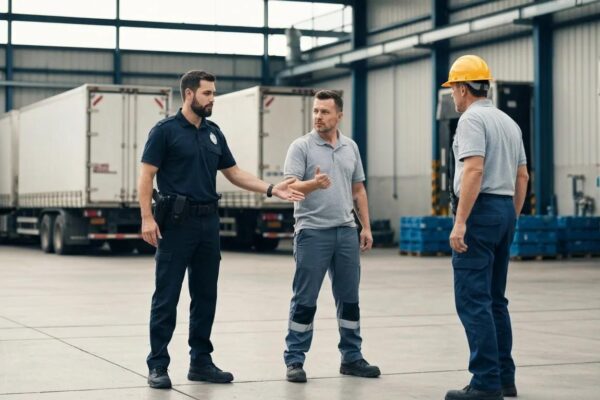
Guards prevent workplace violence and accidents through regular patrols, heightened situational awareness and trained de‑escalation techniques that remove hazards before they become incidents. They focus on choke points — loading docks, forklift aisles and staging areas — intercept unauthorized entrants and separate agitated individuals to stop situations from escalating. For example, a guard who notices tailgating at a dock can halt an unverified delivery, check credentials and prevent a theft attempt that might otherwise lead to confrontation or unsafe handling of goods. Those interventions both deter bad actors and reduce accidental exposure to dangerous operations, and they naturally connect to the guard’s role in day‑to‑day safety enforcement.
What Role Do Security Guards Play in Enforcing Safety Protocols?
Guards enforce safety protocols by verifying PPE, managing access into powered‑industrial‑truck zones and documenting violations that require corrective action — all of which lift overall compliance. They serve as checkpoints to ensure only certified operators enter forklift areas, help validate contractor credentials at delivery gates and perform routine inspections that spot blocked exits or unsecured loads. Their incident reports and daily logs create an audit trail safety teams use to prioritize training and remediation. Clear, consistent enforcement by guards supports systematic safety improvements and contributes to metrics such as reduced shrink and higher productivity.
What Are the Key Benefits of On-Site Security Guards for Dallas Warehouses?
On‑site guards deliver tangible benefits for worker safety and operations: they deter theft and violence, tighten access control to keep untrained people out of hazardous areas, speed incident response to reduce injury severity, and improve employee confidence — which can raise productivity. These outcomes rely on human judgment: guards interpret live camera feeds, verify credentials in real time and take protective action that technology alone cannot. The table below maps common guard functions to direct safety outcomes and the measurable values facilities should track.
| Guard Function | Direct Safety Outcome | Typical Measurable Value |
|---|---|---|
| Active patrols and presence | Fewer opportunistic thefts and violent incidents | Percent reduction in reported incidents (site dependent) |
| Access checkpoints and verification | Reduced unauthorized entries into hazardous zones | Decrease in access violations per month |
| Immediate incident stabilization | Lower injury severity and faster triage | Reduced time‑to‑assist (minutes) |
| Coordination with operations | Better adherence to traffic and PPE rules | Higher compliance percentages |
This comparison shows where guard activities create measurable worker‑safety gains and where to focus impact measurement. The next section covers guard services that curb theft and shrink while supporting safety goals.
(Integration note — business/service messaging: For Dallas warehouses and distribution centers, professionally trained on‑site guards produce these outcomes through visible presence, proactive deterrence, controlled access and coordinated emergency response. When selecting a security partner, prioritize deployments aimed at reducing theft, managing access and improving response times — measures that generate clear worker‑safety improvements and operational confidence. Guards complement technology and safety programs rather than replace them.)
How Do Security Guards Reduce Theft and Inventory Loss?
Guards reduce theft and inventory loss by being a visible deterrent, operating checkpoints during receiving and shipping, and working with inventory teams to validate movements. A guard who checks seal numbers or matches a shipment to its manifest can stop internal or external theft before goods leave the dock. Regular patrols discourage opportunistic theft in staging zones, and when incidents occur guards preserve scenes and collect witness statements to support investigations — which helps prevent repeat losses. Lower theft also improves worker safety by reducing chaotic recoveries and confrontations that create injury risk.
How Does Access Control Improve Warehouse Worker Safety?
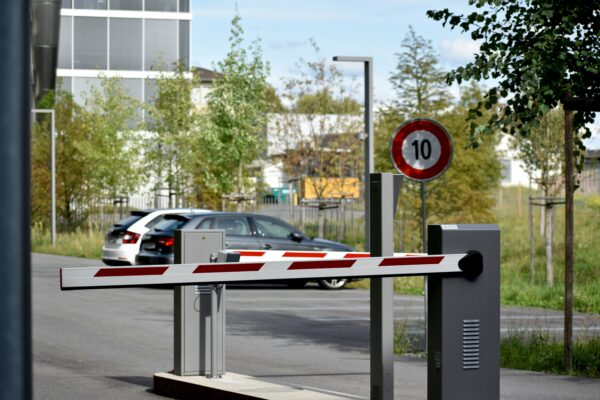
Access control protects workers by limiting entry to credentialed personnel, preventing untrained people from operating equipment or entering live‑loading areas where collisions and falls occur. Guards strengthen automated systems by checking badges, stopping tailgating at secure doors and escorting visitors and vendors as needed — adding a human verification layer that reduces false positives. When integrated with CCTV, guards can quickly investigate anomalies and confirm whether an access event is legitimate, cutting the window of potential exposure. This layered approach lowers the chance of accidental injury from unauthorized access and supports a safer workplace.
How Do Dallas-Specific Challenges Affect Warehouse Worker Safety?
Dallas warehouses contend with regional factors — cargo‑theft patterns, workforce turnover and climate impacts — that shape the security measures needed to protect people and operations. Local cargo theft pressures loading docks and yards; high turnover and contractor traffic can create access gaps; and hot weather or storms add operational hazards. Facilities must design security programs that both protect workers and support compliance with federal OSHA standards as implemented in Texas. Understanding these local drivers informs guard positioning, shift patterns and coordination with local law enforcement and emergency responders.
What Are the Texas OSHA Regulations for Warehouse Safety?
Texas enforcement generally follows federal OSHA standards for common warehouse hazards — hazard communication, powered‑industrial‑truck operations and emergency action planning — and those rules shape how security supports compliance. Guards help by recording access to restricted areas, observing PPE use and assisting with evacuations that are part of an emergency action plan. While guards aren’t a substitute for safety officers, their logs and enforcement actions provide documentary evidence of controls that regulators and insurers view favorably. Connecting security activities to specific OSHA expectations clarifies roles and strengthens your position in audits or post‑incident reviews.
What Are the Recent Warehouse Incident Trends in Dallas?
Recent local trends include higher reports of cargo theft near transport hubs, persistent non‑fatal incidents such as slips, trips and forklift collisions, and disruptions caused by unauthorized access during off‑hours. These patterns highlight the need for dock coverage, perimeter patrols and stricter access management to reduce theft‑related confrontations and accidental injuries. Tracking local incident data lets managers adapt staffing — for example, adding evening patrols or checkpoint coverage during peak shipping windows — so security investments target the greatest risks and support operational continuity.
How Can Warehouses Implement Effective Security and Safety Programs in Dallas?
Start with a risk assessment, then design guard deployments that integrate with technology, training and continuous improvement processes focused on worker‑safety outcomes. Map high‑risk spaces — loading docks, staging areas and forklift corridors — and place guard positions and schedules where they close exposure windows. Define SOPs for access checks, incident escalation and coordination with operations and EMS so handoffs are predictable and response times shrink. The checklist below outlines practical steps for design, implementation and measurement.
- Conduct a site risk assessment to identify high‑exposure zones and peak vulnerability windows.
- Define guard roles, schedules, and SOPs tied to safety goals (access control, patrols, incident stabilization).
- Integrate guards with CCTV and access control systems for verification and real‑time response.
- Establish training, KPIs (response time, incident reductions) and regular drills with operations and EMS.
Assign ownership for KPI monitoring and use incident reviews to refine protocols — a process that naturally leads into how guards and technology collaborate on the ground.
When adding on‑site guards to your safety program, specify duties such as access checkpoints, escorted visitor policies, yard patrol rotations and emergency response roles. Align schedules to peak inbound/outbound windows and task guards with seal verification, manifest confirmation and monitoring forklift zones. Operational integration ensures guards act as an extension of safety teams rather than a separate layer, improving compliance and worker protection.
You can view the GCCA’s (Global Cold Chain Alliance) guide to effective warehouse operations for more information on how you can implement effective security and safety programs in your warehouse.
How Do Security Guards Integrate with Modern Security Technologies?
Guards act as the human layer for technology: they validate analytics alerts, physically confirm suspicious CCTV events and use mobile reporting tools to document incidents and escalate to operations or emergency services. By assessing alerts before wide‑scale disruption, guards reduce false positives and supply context — identity, intent and situational nuance — that analytics can’t. Radios and incident‑reporting apps speed communication, creating a feedback loop where tech drives guard action and guard reports refine detection thresholds. Well‑designed guard‑tech workflows amplify both detection and effective human response, improving worker outcomes.
What Training and Continuous Improvement Practices Support Security Guards?
Training should include emergency response and first aid/CPR, warehouse‑specific hazard recognition (pinch points, load stability), de‑escalation techniques and OSHA‑relevant awareness to support compliance. Regular multi‑team drills with operations, safety staff and EMS sharpen timing and handoffs, while KPI tracking — response time, incident frequency, compliance observations — supplies data for iterative improvement. Monthly incident reviews with security, operations and safety teams build shared accountability and learning, ensuring guard capabilities evolve with changing risks and operational rhythms.
How Does On-Site Security Impact Operational Efficiency and Insurance Costs in Dallas Warehouses?
On‑site security can improve efficiency by cutting downtime from theft investigations, reducing incident‑related workflow interruptions and enabling orderly access procedures that support throughput. From an insurance standpoint, documented risk controls — logs, incident reports and patrol records — demonstrate proactive management and can influence underwriting and premium discussions as loss histories improve. Faster incident handling and fewer unauthorized events reduce direct losses and the frequency/severity of claims. The table below summarizes cost‑benefit items and typical operational impacts to help facilities evaluate investment tradeoffs.
| Cost/Benefit Item | Financial/Operational Impact | Typical Value/Outcome |
|---|---|---|
| Reduced shrink/theft | Lower direct inventory loss | Percent decrease in loss rate |
| Faster incident resolution | Less downtime per incident | Minutes/hours saved per event |
| Documented security program | Improved insurer perception | Potential premium improvement over time |
| Productivity gains from safety | Reduced absenteeism/turnover | Improved throughput metrics |
What Are the Insurance and Liability Benefits of Professional Security Guards?
Professional guards help manage insurance and liability by creating verifiable controls that lower perceived risk, which can lead to premium benefits if loss histories improve. Insurers value documentation — logbooks, incident reports and access records — because they show active mitigation. Guards also reduce liability exposure by enforcing safe practices and limiting circumstances that lead to negligence claims, such as unauthorized access or delayed emergency response. Keeping consistent records and sharing security program details with underwriters positions facilities better during negotiations.
How Does Security Presence Improve Employee Morale and Productivity?
A visible, competent security presence reduces fear of theft and violence, which lowers stress‑related absenteeism and turnover and supports steadier workflows. When staff feel safe, they can concentrate on their tasks rather than personal security, which improves productivity and reduces errors tied to distraction. Guards who engage constructively — reminding teams about hazards and helping report unsafe conditions — reinforce a culture of care that aligns safety and operations. Employee surveys and retention metrics help quantify these softer benefits alongside the hard operational gains.
What Are Best Practices for Preventing Theft and Ensuring Emergency Response in Dallas Warehouses?
Combine layered physical controls, trained guards with clear SOPs, technology integration and regular drills to prevent theft and keep emergency response sharp. Focus on perimeter controls, controlled loading‑dock procedures and internal zoning for high‑value inventory, and pair those measures with guard‑verified access and routine patrols to avoid single points of failure. Define guard roles in emergency action plans — scene control, triage and EMS coordination — and rehearse them in multi‑stakeholder drills. The checklist below captures core elements to implement and sustain.
- Layer perimeter, access control and CCTV with guard verification at critical nodes.
- Define SOPs for shipping/receiving verification, contractor access and high‑value item handling.
- Conduct regular multi‑disciplinary drills that include guards, operations and EMS.
- Maintain detailed logs and incident reviews to drive continuous improvement.
These measures reduce theft opportunities and ensure guards and teams respond efficiently to protect workers and assets, setting the stage for guard‑centered emergency roles and supporting physical measures described below.
How Do Security Guards Enhance Emergency Response and Safety Protocols?
Guards act as on‑site first responders: they secure scenes, provide basic triage and coordinate handoffs to EMS or fire services, which shortens time‑to‑assist and limits secondary hazards. Following SOPs for lockdowns, evacuations and hazard isolation, guards stabilize evolving incidents — for example, containing a spill or rerouting forklift traffic away from an injured worker — until specialists arrive. Regular drills that test guard response timing and communications reduce errors in real events. Making these roles standard practice strengthens both compliance and practical worker protection.
What Physical Security Measures Complement On-Site Guards for Theft Prevention?
Physical controls broaden defenses so guards aren’t the single line of defense. Perimeter fencing, yard lighting, secure loading‑dock gates, internal zoning for high‑value stock and CCTV covering blind spots work with patrols to close gaps. Smaller facilities get big impact from well‑lit docks, badge readers at key doors and scheduled patrols; larger distribution centers benefit from zone‑based access control and dedicated loss‑prevention staff. Pairing these measures with guard verification builds a resilient posture that deters theft and protects workers.
| Measure | Coverage / Complexity | Suitability |
|---|---|---|
| Perimeter fencing & lighting | Broad perimeter protection, low complexity | Small to large warehouses |
| Access control & badge systems | Controlled internal zones, medium complexity | Medium to large facilities |
| CCTV with human monitoring | Continuous observation, medium complexity | All sizes, high‑value zones |
| Loading‑dock protocols & guarded checkpoints | Targeted risk reduction, operational complexity | High‑throughput facilities |
Frequently Asked Questions
What qualifications should I look for in security guards for my warehouse?
Hire guards with a valid state security license and certifications in first aid/CPR. Experience in warehouse or industrial settings is highly valuable because it brings familiarity with common hazards and workflows. Look for training in conflict resolution and emergency response, plus evidence of good communication or customer‑service skills — all help guards manage incidents and interact productively with employees and vendors.
How can technology enhance the effectiveness of security guards in warehouses?
Technology extends a guard’s reach: CCTV gives real‑time visibility, access control documents entries and exits, and mobile reporting apps let guards capture and escalate incidents quickly. Analytics can highlight patterns so you deploy guards where they’ll have the most impact. Together, tech and trained personnel reduce false alarms, speed resolution and provide records that improve future responses.
What are the best practices for training security guards in a warehouse setting?
Start with thorough onboarding that covers safety protocols, emergency procedures and hazard recognition specific to your facility. Run regular drills for evacuations and incident response, and provide ongoing training on OSHA‑relevant topics. Scenario‑based exercises build decision‑making skills and help guards practice real‑world responses under pressure.
How do security guards contribute to compliance with safety regulations?
Guards help enforce safety rules — checking PPE, controlling access to hazardous areas and documenting violations. Their logs and incident reports provide evidence for audits and inspections and support a culture of compliance among employees. While not a replacement for safety officers, guards are a valuable part of a documented control environment that regulators and insurers recognize.
What should be included in a security incident report?
A complete incident report records the date, time and location, a clear description of what happened, the people involved and any witnesses, and the actions taken by security. Note injuries, property damage and emergency services responses, and attach photos or video when available. Detailed reports aid investigations, help refine protocols and support insurance or legal processes.
How can I assess the effectiveness of my warehouse security program?
Measure KPIs like response times, numbers of security breaches, and compliance rates with safety protocols. Regularly review incident reports and conduct audits to spot trends. Solicit employee feedback on perceived safety and benchmark against industry practices. Use those insights to adjust staffing, SOPs and technology to drive continuous improvement.