
How Dallas Security Guards Minimize Downtime in Warehouses
Written by: Greg Peters – Military Veteran & Owner of International Security Services
How Professional Security Reduces Downtime in Warehousing Operations in Dallas Fort Worth
Warehousing downtime—periods when picking, packing, or shipping operations halt—translates directly into missed orders, late shipments, and higher operational costs. This article explains how professional security interrupts the main causes of downtime—external theft, vandalism, internal shrinkage, unauthorized access, and emergency incidents—so warehouses in the Dallas Fort Worth (DFW) metroplex keep throughput steady and supply chains reliable. You will learn the primary failure modes that create interruptions, the mechanisms by which on-site security guards and mobile patrols limit those failures, and how integrated security technology accelerates detection, verification, and resolution. Practical guidance follows for selecting a security partner with local DFW expertise, plus measurable metrics and an example DFW-focused case narrative showing before/after outcomes. Throughout, the article uses warehouse-security terminology like inventory accuracy, perimeter patrols, access control systems, CCTV with AI analytics, and digital incident reporting to help operations, logistics, and facilities managers evaluate security investments that reduce downtime.
What Are the Main Causes of Downtime in Dallas Fort Worth Warehouses?
Downtime in DFW warehouses arises from discrete failure categories that interrupt normal workflows and require time-consuming remediation. Each cause—external theft, vandalism, technology outages, internal shrinkage, and unauthorized access—has a clear mechanism that turns a security incident into hours of lost productivity. Understanding these causes helps prioritize countermeasures and resource allocation for continuous operations. The list below summarizes the primary causes and how each one directly leads to operational interruptions.
Warehouse downtime in the DFW region often maps to specific operational impacts such as halted receiving docks, paused order fulfillment, and forced inventory audits, which create ripple effects through the supply chain. The next subsections break down theft and vandalism, then internal shrinkage, to show their operational mechanics and remediation timelines.
How Do Theft and Vandalism Impact Warehouse Operations?
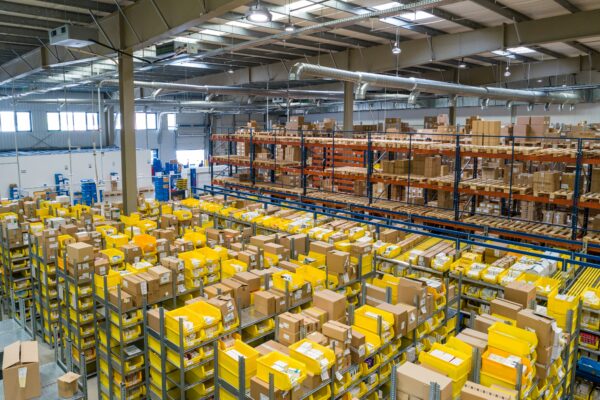
External theft and vandalism remove or damage stock, disrupt layouts, and trigger investigations that stop normal workflows until reconciliations are complete. Cargo theft, yard theft, and targeted loading-dock theft force immediate holds on shipments while teams conduct counts, quarantine affected lots, and prepare insurance documentation, which consumes labor and stalls throughput. Damaged infrastructure—broken dock doors, punctured trailer seals, or sabotaged conveyors—requires repairs and safety inspections before operations resume, compounding delays. These incidents typically cause cascading effects: picking queues back up, customer cutoffs are missed, and expedited shipping costs rise to recover delivery windows.
Key findings show that in 2023, 2,908 incidents of cargo theft were reported. Of those, 1,049 were committed at warehouses/distribution centers, with the average cargo theft value being $195K.
Because DFW is a major logistics hub, rapid verification and restoration practices are essential to minimize downtime and financial exposure. The mechanisms for reducing those delays include faster incident detection, immediate verification, and rapid coordination between security personnel, operations managers, and first responders.
What Role Does Internal Shrinkage and Employee Theft Play in Downtime?
Internal shrinkage—misplaced, mis-scanned, or intentionally diverted inventory—creates discrepancies that force reconciliation cycles and targeted audits, which take personnel away from revenue-generating tasks. Employee theft can be opportunistic or organized, and while the monetary loss is important, the operational cost is often higher: teams stop picking to investigate, ERP/WMS reconciliations run, and corrective restocking or order rework is scheduled.
These interruptions reduce order accuracy and lengthen lead times for affected SKUs.
Mitigation blends process controls, access restrictions, and monitoring. When security and operations converge—through access control points, CCTV review workflows, and incident reporting—discrepancies are caught earlier and investigations are more targeted, reducing the scope of audits and the resulting downtime.
How Do On-Site Security Guards Help Reduce Warehouse Downtime in DFW?
On-site security guards act at the intersection of detection, verification, and immediate response to limit the time between incident onset and operational recovery. Guards perform visible deterrence, manage access control points, verify alarms, and coordinate with operations and emergency services to stop incidents from escalating into prolonged downtime. Their presence shortens decision loops and frequently converts potentially long investigations into quick, manageable incidents. The result is fewer halted shifts, faster return-to-service for critical equipment or docks, and reduced ripple effects across shipping schedules.
Guards also produce structured reports and documented chains of custody that accelerate insurance claims and internal remediation, which helps operations resume normal cadence more quickly. The following subsections describe visible deterrence and access/response duties in greater detail, including practical examples of guard workflows that reduce downtime.
Why Is Visible Security Presence Critical for Theft Prevention?
Visible on-site security presence deters opportunistic criminals and reduces the likelihood of planned theft, which directly lowers incident counts and the downstream audits that cause downtime. Uniformed guards, regular patrols, and staffed checkpoints change the risk calculus for perpetrators by increasing the perceived probability of detection and interception. Behavioral deterrence reduces frequency of yard and loading-dock incidents, which in turn reduces the need for inventory reconciliations and unplanned operational pauses.
For DFW warehouses, local presence matters: guards familiar with regional risk patterns can recognize suspicious behavior tied to area-specific tactics and escalate faster. As an example of operational integration, on-site guards often handle rosters, access verification, and gate operations in coordination with warehouse managers; when combined with clear logging procedures, these tasks shorten resolution times and sustain throughput. This practical integration demonstrates how human resources complement technology-driven alerts—a theme explored in later sections.
Introductory table: roles, tasks, and the direct impacts guards services deliver on downtime reduction.
| Role | Primary Actions | Impact on Downtime |
|---|---|---|
| On-site Guard | Access checks, patrols, incident triage | Reduces verification time and halts escalation |
| Checkpoint Operator | Visitor credentialing, dock control | Prevents unauthorized loading, avoids audits |
| Incident Coordinator | Liaison with ops & responders | Faster recovery and clear documentation |
This EAV-style table clarifies how guard responsibilities translate to measurable operational benefits. The mapping shows that assigning clear guard tasks reduces the average time-to-verification and the downstream hours lost to reconciliation or repair.
What Are the Benefits of Mobile Patrol Services for Warehouse Security in Dallas?
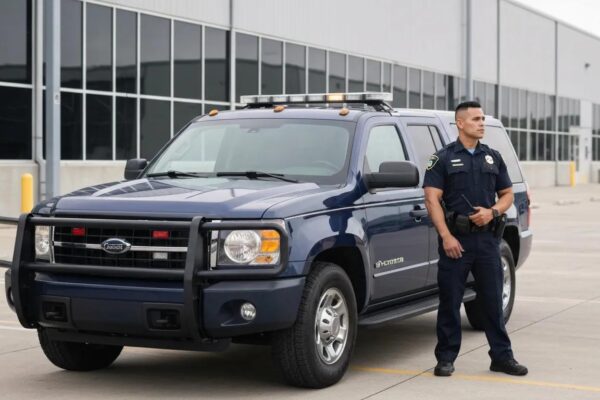
Mobile patrol services extend perimeter coverage and provide rapid, flexible verification capacity that static posts alone cannot achieve. Patrols operate randomized routes, perform perimeter inspections, and verify alarms in-person, preventing false positives from shutting down operations and stopping small issues from escalating. Their mobility and ability to cover multiple sites across the DFW metroplex make them an efficient mechanism for reducing cross-site downtime and for supplementing site-based guard teams during spikes in activity or incidents.
Mobile patrols also integrate GPS-verified checkpoints and digital reporting, which delivers audit trails that operations teams can use to triage issues without stopping entire workflows. The next subsections describe how randomized deterrence and rapid alarm response work in practice and how patrols lower the operational interruption footprint.
How Do Mobile Patrols Provide Unpredictable Deterrence and Perimeter Security?
Mobile patrols create unpredictability for potential intruders by using randomized routing and GPS-verified checkpoint logs that are difficult to map and exploit. This unpredictable presence reduces targeted attacks on specific loading docks or high-value storage zones, because attackers cannot reliably time their actions. Patrol digital reporting highlights vulnerabilities—poor lighting, damaged fencing, or unlocked gates—so operations and facilities teams can rectify physical gaps before they cause theft or vandalism that would halt operations.
When integrated with site risk assessments, mobile patrols focus attention on the highest-impact vulnerabilities and recommend low-disruption fixes, which prevents incidents that would otherwise force downtime for repairs or audits. The patrol-to-facilities feedback loop keeps minor issues from becoming operational stoppages.
Introductory comparison table: patrol services, attributes, and outcomes.
| Patrol Type | Characteristic | Typical Outcome |
|---|---|---|
| Scheduled Patrol | Predictable routes and times | Good for compliance, lower surprise deterrence |
| Randomized Patrol | Unpredictable routing, GPS verification | High deterrence, reduces targeted attacks |
| Alarm Response Patrol | Rapid verification of triggered alarms | Lowers false-alarm shutdowns, faster resolution |
This table highlights how different patrol modalities impact operational continuity. Choosing the right mix balances cost and the specific downtime risks inherent to a DFW warehouse.
How Does Rapid Alarm Response from Patrols Minimize Operational Interruptions?
Rapid, in-person alarm verification prevents false or ambiguous alerts from triggering full shutdown procedures that halt picking and shipping. When patrol units respond quickly and verify an alarm on-site, they either clear the alert or initiate targeted containment steps that avoid pulling entire shifts into an investigation. This verification flow reduces mean time to resolution and preserves operational windows that would otherwise be consumed by blanket safety checks.
In the DFW context, mobile patrols covering multiple industrial corridors can provide alarm verification within industry-standard response windows; this capability lowers the percentage of alarms that escalate into multi-hour disruptions and helps maintain SLAs with carriers and customers.
How Does Integrated Security Technology Enhance Downtime Reduction in Warehousing?
Integrated security technology—CCTV with AI analytics, access control systems, GPS route verification, and digital incident reporting—amplifies the effectiveness of human security by speeding detection, improving verification accuracy, and enabling data-driven decision-making. Technology shortens the detection-to-response timeline so guards and patrols can be dispatched proactively rather than reactively. By combining continuous monitoring with human verification, warehouses reduce unnecessary operational pauses and concentrate remediation efforts where impact on uptime is highest.
Technology also creates traceable incident records that reduce the administrative drag of investigations and insurance claims, which further shortens process-related downtime. The following subsections drill into AI CCTV capabilities and access control workflows that prevent unauthorized entry.
What Role Do CCTV and AI Camera Systems Play in Continuous Monitoring?
CCTV with AI analytics flags anomalies—loitering near high-value racks, perimeter breaches, or unusual movement patterns—so security teams receive prioritized alerts instead of constant noise. These analytics reduce false positives and help guards focus on events that require immediate action, which accelerates verification and minimizes unnecessary operational pauses. AI-assisted cameras also provide time-stamped evidence that operations teams use to isolate affected SKUs or dock doors and continue unaffected areas of the warehouse.
When alerts from AI cameras tie directly into guard dispatch systems and digital incident reports, the detection-to-action chain shrinks dramatically; guards arrive with context, operations leaders make informed triage decisions, and downtime is limited to the smallest necessary containment.
Introductory list: ways AI-enabled CCTV shortens incident workflows.
- Priority Alerts: AI ranks events to avoid alarm fatigue and target critical incidents.
- Contextual Evidence: Video clips give guards the situational awareness needed on arrival.
- Automated Verification: Some analytics can confirm motion-plus-heat or object removal patterns, accelerating decisions.
These items show how analytics transform continuous monitoring into actionable intelligence that keeps operations moving.
How Do Advanced Access Control Systems Prevent Unauthorized Entry?
Advanced access control systems—badge readers, mobile credentials, and biometric gates—restrict movement into sensitive zones and create auditable logs that simplify investigations. Preventing unauthorized entry at doors, docks, and mezzanines reduces the incidence of mis-picks, stolen pallets, and tampered orders that cause reconciliation-driven downtime. Integration with guard consoles allows security officers to remotely lock doors, revoke credentials, and receive instant alerts when exceptions occur.
An article by Global Trade says, “Access control officers are critical for facilities with valuable or sensitive inventory. They manage entry points and ensure only authorized personnel access restricted areas.”
When access control events feed into incident-management platforms, operations can isolate affected zones without stopping the entire facility, limiting downtime to targeted areas and enabling business continuity for the rest of the site.
What Quantifiable Benefits Result from Professional Warehouse Security in DFW?
Professional security delivers measurable improvements in incident rates, response times, inventory accuracy, and operational uptime, all of which map directly to reduced downtime and lower fulfillment costs. By tracking KPIs such as incident counts, mean time to verification, shrinkage percentage, and uptime percentage, warehouses can quantify security ROI and prioritize interventions that yield the largest uptime gains.
How Does Security Improve Inventory Accuracy and Supply Chain Continuity?
Improved detection and access control reduce unauthorized removal and misdirection of stock, which raises inventory accuracy and reduces the time teams spend reconciling discrepancies. Higher inventory accuracy shortens replenishment cycles and decreases emergency restocking that often causes expedited shipments and higher shipping costs. These improvements stabilize lead times and support just-in-time operations, making the entire downstream supply chain more reliable.
How Does Enhanced Employee Safety Contribute to Reduced Downtime?
Employee safety measures—improved lighting, secure parking, escorted shift changes, and rapid incident response—reduce workplace incidents that can halt operations for investigations or safety stand-downs. Workers who feel safe report higher retention and steadier staffing levels, reducing the labor variability that leads to scheduling disruptions and throughput losses. Safe facilities also face fewer OSHA-related pauses and clearer pathways for incident resolution.
Practical safety investments work hand-in-hand with security processes to maintain continuous operations, because fewer safety incidents mean fewer mandatory investigations and less reactive operational stoppage across the warehouse.
How to Choose the Right Professional Security Partner for Warehouses in Dallas Fort Worth?
Selecting a security partner for DFW warehouses requires evaluating local expertise, measurable performance metrics, training standards, technology integration capabilities, and reporting transparency. Prioritize providers who can demonstrate clear response-time SLAs, GPS-verified patrol routes, and integrated incident reporting that ties into your warehouse management or operations dashboards. The checklist below helps operations leaders compare proposals and ask targeted questions that reveal whether a provider will meaningfully reduce downtime or merely add nominal coverage.
- Local DFW Expertise: Can the provider demonstrate knowledge of regional crime patterns and respond quickly across industrial corridors?
- Response Metrics: Does the provider commit to measurable response times and offer GPS-verified patrol logs?
- Technology Integration: Can guard workflows integrate with your CCTV, access control, and digital reporting platforms?
- Training & Reporting: Are officers trained in access control, incident documentation, and operations coordination with audit-ready reports?
This checklist focuses on the attributes most directly tied to downtime reduction and supports objective vendor comparisons. The next subsections detail why local knowledge matters and what training and integration capabilities to expect.
Why Is Local DFW Expertise Essential for Effective Warehouse Security?
Local DFW expertise shortens response times and improves contextual threat recognition, because providers familiar with the metroplex understand hotspot corridors, common tactics, and logistics traffic patterns that affect risk. Local teams often have established relationships with area law enforcement and first responders, which expedites coordinated responses when incidents require external support. These advantages reduce mean time to resolution and thereby shrink the window of operational interruption.
Choosing a partner with demonstrated DFW operations capability ensures patrol routing and guard rostering are optimized for the specific geography and logistics volumes of the region, which lowers the probability and duration of downtime events.
What Training and Technology Integration Should You Expect from Security Providers?
Expect providers to train officers in access control procedures, alarm verification protocols, digital incident reporting, and coordination with operations and emergency services. Training should include scenario-based drills for common warehouse incidents—yard theft, dock tampering, and internal shrinkage investigations—to ensure staff reduce disruption rather than inadvertently triggering broader shutdowns. Providers should also support integration with CCTV systems (including AI alerts), access control logs, and GPS-verified patrol platforms so reports flow into operations in near-real time.
As part of choosing a partner, ask for sample incident reports and evidence of digital reporting systems that provide timestamps, photos, and clear escalation paths; this transparency directly shortens investigative cycles and helps restore normal operations faster. For warehouses seeking a practical first step, arrange a security audit focused on downtime drivers and remediation timelines; contacting a local DFW security provider for an operational security audit is a practical next move to quantify expected uptime improvements.
| Service Component | Expected Capability | How It Reduces Downtime |
|---|---|---|
| Officer Training | Access control, alarm verification | Faster, accurate responses avoid full-shift interruptions |
| Tech Integration | CCTV+AI, access control logs, patrol GPS | Automated alerts + verified response shorten resolution time |
| Reporting | Time-stamped digital incident records | Speeds investigations and insurance processes |
This final table summarizes provider capabilities to look for and links them directly to downtime reduction outcomes. By focusing on measurable behaviors, technology interoperability, and local DFW knowledge, operations teams can select partners that materially protect throughput and continuity.
Frequently Asked Questions
What are the key metrics to evaluate the effectiveness of warehouse security?
When assessing warehouse security effectiveness, focus on key performance indicators (KPIs) such as incident counts, average response times, inventory accuracy, and operational uptime. These metrics provide insights into how well security measures are functioning. For instance, a decrease in theft incidents and a reduction in response times indicate improved security performance. Additionally, tracking inventory accuracy can reveal how effectively security measures prevent unauthorized access and mismanagement, ultimately leading to enhanced operational efficiency and reduced downtime.
What are the benefits of conducting regular security audits in warehouses?
Regular security audits in warehouses are essential for identifying vulnerabilities and assessing the effectiveness of existing security measures. These audits help pinpoint areas that require improvement, such as access control weaknesses or insufficient surveillance coverage. By addressing these vulnerabilities proactively, warehouses can enhance their security posture and reduce the risk of incidents that lead to downtime. Additionally, audits provide an opportunity to evaluate the performance of security personnel and technology, ensuring that operations remain efficient and secure over time.
How does employee training impact warehouse security and downtime?
Employee training plays a crucial role in enhancing warehouse security and minimizing downtime. Well-trained staff are more adept at recognizing suspicious activities, following security protocols, and responding effectively to incidents. Training should cover access control procedures, emergency response, and incident reporting. When employees are knowledgeable and vigilant, they can prevent security breaches before they escalate, thereby reducing the likelihood of operational interruptions. Furthermore, a culture of security awareness fosters a safer work environment, contributing to overall productivity and efficiency.
What role does communication play in effective warehouse security management?
Effective communication is vital for successful warehouse security management. Clear communication channels between security personnel, operations teams, and management ensure that everyone is informed about potential threats and security protocols. Regular briefings and updates help maintain situational awareness and facilitate quick decision-making during incidents. Additionally, integrating communication tools with security systems allows for real-time alerts and coordinated responses, minimizing downtime. A well-informed team can act swiftly to address security issues, ultimately protecting warehouse operations and maintaining productivity.
How can warehouses leverage data analytics for security improvements?
Warehouses can leverage data analytics to enhance security by analyzing incident patterns, response times, and operational metrics. By examining historical data, security teams can identify trends and vulnerabilities, allowing them to implement targeted interventions. For instance, if data reveals frequent thefts during specific shifts, additional security measures can be deployed during those times. Furthermore, analytics can help evaluate the effectiveness of security technologies and personnel, enabling continuous improvement. This data-driven approach not only strengthens security but also optimizes resource allocation and reduces downtime.
Conclusion
Implementing professional security measures in Dallas Fort Worth warehouses significantly reduces downtime by addressing theft, vandalism, and internal shrinkage effectively. The integration of on-site guards, mobile patrols, and advanced technology ensures a swift response to incidents, maintaining operational continuity and enhancing inventory accuracy. By prioritizing security investments, warehouse managers can achieve measurable improvements in efficiency and cost savings. Take the next step in safeguarding your operations by exploring tailored security solutions that fit your specific needs.