
Why CCTV Isn’t Enough on Its Own — and How On‑Site Guards Close the Gaps in Warehouse Security
Written by: Greg Peters – Military Veteran & Owner of International Security Services
Warehouses operate in a high‑risk environment: cargo theft, internal shrinkage and workplace incidents all carry real financial and reputational costs. Cameras provide valuable visibility and evidence, but they’re not a complete security solution. This piece explains the common failure modes of camera‑only systems and shows the practical ways on‑site security guards add deterrence, immediate intervention and human judgment. You’ll get clear comparisons, operational examples and action steps that link terms like warehouse security guards, manned guarding, access control, remote monitoring with guards, and hybrid security systems to real procurement and operational choices.
The effects of these events often ripple beyond the immediate loss, as industry research shows.
The Growing Threat of Cargo Theft: Cargo theft and warehouse break‑ins produce more than lost inventory: they drive up supply costs, disrupt operations and can damage customer trust. These incidents also increase insurance and security expenses over time, making prevention and detection critical for resilient operations.
On‑site security services for warehouses commonly include manned guarding, mobile patrols, access control and emergency response.
Where CCTV Falls Short in Warehouse Security
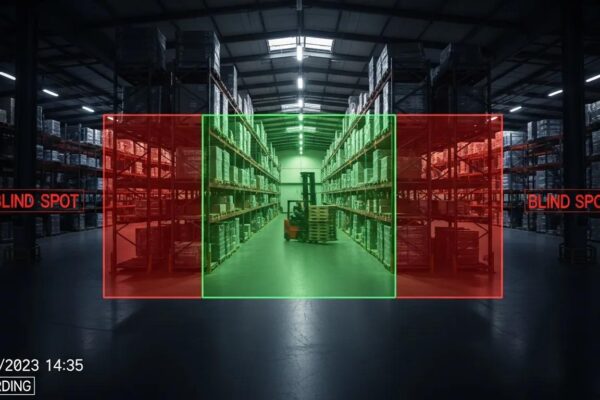
CCTV gives continuous visual records, but it’s a passive layer: cameras watch and log, they don’t act. Coverage is limited by camera placement, lighting and network constraints; analytics can generate false positives and miss context; and equipment can fail or be disabled. Without a human layer to interpret, verify and respond, footage mainly helps after an incident rather than preventing one. For these reasons, CCTV should be one component of a layered security program — not the only one.
- Limited coverage: camera placement and line‑of‑sight leave predictable blind spots around docks, aisles and staging areas.
- Passive operation: cameras can’t physically deter or stop thefts or unsafe behaviour in real time.
- Context gaps: analytics flag motion but can’t reliably judge intent or distinguish contractors from bad actors.
- Tampering and outages: cameras, recorders and networks are vulnerable to power loss, network failure or deliberate sabotage.
Relying only on camera feeds often leads to delayed responses, incomplete prevention and higher operational risk. The next section explains how blind spots and passive surveillance create real vulnerabilities in daily warehouse workflows.
How CCTV Blind Spots and Passive Surveillance Produce Security Gaps
Blind spots appear when cameras don’t cover critical zones — loading docks, blind corners, tall racking aisles and vehicle staging lanes are common examples. Budget‑driven placement, changing storage layouts and poor lighting make these gaps worse. Opportunistic and organized offenders study predictable coverage and act during low‑visibility windows like night shifts, shift changes or busy handoffs. When activity falls outside camera views, you lose the chance to deter or contain incidents as they happen and you complicate later investigations.
That leads to a second problem: cameras don’t provide the contextual, real‑time intervention that many incidents require.
Why CCTV Can’t Deliver Real‑Time Intervention and Human Judgment
Analytics can alert on motion, loitering or perimeter breaches, but they can’t de‑escalate a confrontation, secure a scene, or judge ambiguous behaviour. Remote operators often oversee multiple sites and rely on escalation protocols that introduce delay; AI models struggle with nuance and generate false alarms that can desensitize monitoring teams. On‑site guards provide immediate assessment, apply judgment to unclear situations and start containment or emergency procedures without waiting for remote verification.
With that in mind, the next section outlines the practical duties guards perform and the measurable value they add to warehouse security.
How On‑Site Security Guards Strengthen Warehouse Protection

Guards turn surveillance into action through visible presence, unpredictable patrols and immediate operational responses. They assess situations continuously, staff access points, verify credentials and follow incident protocols cameras cannot. Their presence alters an attacker’s risk calculation, shortens response times and helps preserve evidence through initial scene control and witness management. The table below maps common guard activities to the operational value they typically provide.
The table compares guard activities, key attributes and the operational value they deliver.
| Guard Function | Key Attribute | Typical Operational Value |
|---|---|---|
| Visible patrols | Presence & unpredictability | Stronger deterrence; fewer opportunistic attempts |
| Access point staffing | Credential checks & screening | Lower unauthorized entries; improved chain‑of‑custody |
| Incident response | On‑site response time | Faster containment; better evidence preservation |
| Compliance enforcement | Safety checks & reporting | Fewer accidents; greater audit readiness |
These activities address gaps cameras leave open. Next we look at the deterrence effect and routine tasks that make guard value tangible.
Proactive Deterrence Benefits of Manned Guarding
A visible, trained security presence discourages both opportunistic and planned theft. Guards use unpredictable patrols, random checkpoint inspections and active engagement with drivers and staff to increase scrutiny and raise the risk for would‑be offenders. This uncertainty reduces attempt rates. Regular guard briefings and documented patrols also create an audit trail that supports loss‑prevention programs and reduces the likelihood of insider collusion.
Deterrence naturally connects to incident management — the subject of the next section.
How Guards Manage Real‑Time Response and Emergencies
When an alarm or suspicious event occurs, guards typically: assess the scene, secure the area, notify emergency services if necessary, and preserve evidence while coordinating with operations. Their proximity enables containment of suspects, immediate first aid for injured workers and direction of traffic or evacuation during hazards. Guards also collect witness statements and prepare preliminary reports that streamline insurance claims and police investigations.
These operational advantages set up the case for integrating on‑site personnel with technology to amplify strengths and reduce weaknesses.
Why Integrating On‑Site Security with Warehouse Technology Matters
Pairing guards with CCTV, access control and AI analytics builds a hybrid model that combines technological reach with human judgment. Sensors and analytics widen situational awareness and speed detection; people verify context, decide and act. A well‑designed workflow routes high‑confidence alerts to on‑site guards, reducing false dispatches and speeding response to true threats. Successful integration depends on clear protocols, secure communications and defined roles so sensors, algorithms, remote operators and guards work predictably together.
The table below shows how key components integrate and the operational benefits to expect.
| Component | Integration Attribute | Operational Benefit |
|---|---|---|
| AI analytics | Real‑time flagging & confidence scoring | Earlier anomaly detection; prioritized alerts |
| Remote monitoring | Triage protocols & verification | Fewer false dispatches; centralized oversight |
| On‑site guards | Physical response & contextual judgment | Immediate intervention; evidence protection |
In a good pipeline: sensors detect, analytics prioritize, remote teams triage and guards act — each step lowers overall risk when designed together. The next section walks through how hybrid systems operate in practice and what metrics to track.
How Hybrid Systems Combine Guards with CCTV and AI Analytics
A typical hybrid workflow: sensors (cameras, motion detectors) flag activity; analytics score and surface anomalies; remote operators verify context and escalate high‑risk alerts; on‑site guards receive concise dispatches and investigate. This layered filtering cuts false positives and ensures human attention lands on incidents that need it. Analytics can also extend effective coverage while guards focus on high‑value points, improving both efficiency and response. Common metrics to monitor include alert‑to‑dispatch time, false‑positive rate and percentage of incidents requiring physical intervention.
With automation and human oversight working together, warehouses get faster, more accurate defenses. The following section explains the role of human oversight in improving remote monitoring outcomes.
The Role of Human Oversight in Remote Monitoring
Human oversight adds the context algorithms miss. Supervisors verify identity, cross‑check visitor logs and interpret ambiguous motion — tasks AI can’t do reliably. This review layer reduces unnecessary local dispatches and ensures guards are sent only when events meet defined risk thresholds. When oversight is linked to access control and inventory systems, incidents reconcile faster and small errors are prevented from becoming larger problems.
Which Warehouse Threats Do On‑Site Guards Address?
Guards tackle threats that cameras alone struggle to stop: external cargo theft and organized intrusion, insider theft and collusion, vandalism and trespass, and safety incidents requiring immediate containment. They perform preventive work — patrols, access control and verification — and reactive work — scene control, first response coordination and liaison with law enforcement. Routine audits and protocols reduce shrinkage and interruptions; rapid response limits damage when incidents occur. Below are the principal threats and typical guard countermeasures.
Knowing the common vulnerabilities and methods used in cargo theft helps shape effective prevention.
Detection and Prevention of Cargo Theft: Cargo is most vulnerable during loading and unloading, in freight yards and transit. Theft can occur via employee collusion or external offenders and is often enabled by documentary fraud or insecure staging. Target‑hardening, improved forwarding practices and tighter inventory controls reduce risk for smaller organisations and larger operations alike.
- External cargo theft: visible patrols, guarded checkpoints and vehicle inspections to deter load interception and hijacking.
- Internal theft / insider collusion: credential checks, randomized audits and witness oversight to detect and deter internal fraud.
- Vandalism & trespass: perimeter patrols, after‑hours containment and rapid reporting to limit property damage.
- Safety hazards: traffic control, PPE enforcement and immediate first response to reduce injuries and liability.
These categories illustrate the scope of guard responsibilities. The next sections explain how guards reduce theft and enforce safety.
How On‑Site Security Reduces External and Internal Theft
To stop external theft, guards control entry points, verify delivery paperwork and secure loading docks during handoffs — interrupting common theft vectors. To reduce internal risk, guards support inventory reconciliation with spot checks, supervise high‑risk operations and coordinate audits with management. Their presence raises the perceived and actual chance of detection, deterring collusion; when incidents occur, guards protect chain‑of‑custody and provide prompt documentation and witness statements that strengthen investigations.
The guard role naturally extends to safety and anti‑vandalism duties, described next.
How Guards Enforce Safety Compliance and Prevent Vandalism
Guards monitor traffic flow in yards, check PPE use on the floor and flag unsafe stacking or staging practices — steps that reduce accidents and downstream liability. Routine inspections uncover hazards early so operations can correct them before incidents escalate. A visible security presence also discourages vandalism and trespass; guards intervene on suspicious after‑hours activity and work with maintenance and operations to secure damaged areas. Prompt reporting from guards speeds repairs and provides documentation for audits and insurers.
Business Value and ROI of Professional Warehouse Security
Professional on‑site security produces measurable benefits: fewer thefts, reduced insurance exposure, less downtime and safer employees. Guards lower incident frequency and severity via prevention and rapid containment, which can translate into lower premiums, fewer direct losses and reduced investigation costs. The comparison below summarizes cost drivers and likely operational outcomes so decision makers can weigh trade‑offs.
| Security Option | Key Cost Factor | Typical Operational Impact |
|---|---|---|
| CCTV only | Equipment & monitoring fees | Limited prevention; higher post‑incident costs |
| CCTV + Guards | Equipment + staffing | Stronger prevention; faster response; lower losses |
| Guards only | Staffing & management | High deterrence; ongoing operational expense |
This comparison helps frame ROI. The sections that follow explain insurer impacts and the evidence for efficiency gains from adding staff.
How On‑Site Security Can Lower Insurance Costs and Operational Losses
Insurers look at claim frequency and severity. Facilities that demonstrate active risk management — visible guards, logged patrols and structured incident reporting — typically receive better underwriting terms. Guards reduce claim frequency by deterring theft and containing incidents early; they also provide chain‑of‑custody documentation that smooths claims processing and reduces disputes. Exact premium effects vary by carrier and region, but a consistent outcome is that documented mitigation lowers insurer risk ratings and can improve coverage terms over time.
Evidence for Improved Efficiency and Operational Confidence with Manned Guarding
Industry reports and field examples show that sites combining guards with technology experience fewer large losses and faster incident resolution than camera‑only locations. For example, an anonymized case where an on‑site guard intercepted suspicious staging at a dock prevented a diverted load and preserved evidence for prosecution. Beyond direct savings, managers report quicker resolutions, higher staff confidence and clearer safety compliance — qualitative benefits that support the financial case for staffing by lowering loss ratios and operational disruption.
To compare options, the table below outlines annual cost drivers and the typical risk reduction each configuration delivers.
| Security Option | Annual Cost Driver | Risk Reduction Outcome |
|---|---|---|
| CCTV only | Hardware + monitoring | Moderate detection; limited prevention |
| CCTV + Guards | Hardware + staffing + integration | High prevention; faster containment |
| Guards only | Staffing + management | Strong deterrence; less evidence capture |
Hybrid approaches usually offer the best balance of prevention and resilience. The final section below recommends next steps for organisations considering deployment.
On‑site security services for warehouses include manned guarding, mobile patrols, access control and emergency response.
If you’re evaluating options, start with a site security assessment or a comparative quote for CCTV‑only, guards‑only and hybrid deployments based on your loss history and operational priorities. A structured assessment aligns patrol routes, checkpoint staffing, analytics thresholds and escalation protocols so cameras and guards work efficiently together to reduce theft, lower insurance exposure and improve safety.
- Start with data: collect incident logs, inventory variances and access records to identify high‑risk zones.
- Map coverage: overlay camera fields‑of‑view on operational flows and flag blind spots for guard patrols.
- Design workflows: send high‑confidence alerts to on‑site personnel and establish verification and escalation steps.
- Measure outcomes: track alert‑to‑response times, incident frequency and losses to evaluate ROI and refine deployment.
These steps align security choices with measurable business outcomes so investments deliver prevention and operational continuity.
Frequently Asked Questions
1. What are the main differences between CCTV and on‑site security guards?
CCTV is primarily a passive surveillance tool: it records activity for review and evidence. It can deter by presence but cannot intervene. On‑site guards actively monitor, assess situations, and respond in real time. Guards deter through presence, verify identity, de‑escalate conflicts, coordinate with emergency services and provide first aid — capabilities a camera alone cannot deliver. Together, they form a more effective security posture.
2. How do on‑site security guards improve employee safety?
Guards enforce safety rules, monitor PPE usage, manage vehicle and pedestrian traffic, and perform routine safety checks. By responding quickly to incidents and flagging hazards, they help prevent accidents and reduce injury risk. Their presence also reassures staff, which supports morale and productivity.
3. What incidents can on‑site security guards handle?
Guards respond to theft, vandalism, suspicious activity, safety hazards and medical emergencies. They secure scenes, preserve evidence, gather witness statements and coordinate with law enforcement or emergency responders as required. Their immediate actions minimize operational impact and support follow‑up investigations.
4. How can businesses measure security effectiveness?
Track KPIs such as incident frequency, alert‑to‑response time, loss values and false‑positive rates. Regular audits and before‑and‑after comparisons around staffing changes help quantify impact. Employee surveys on perceived safety also provide useful qualitative insight.
5. What are the cost trade‑offs between hiring guards and relying on CCTV?
Hiring guards adds staffing costs, but it often reduces theft, shortens incidents and can lower insurance expenses — yielding a positive ROI in many operations. CCTV‑only approaches have lower recurring staffing costs but typically deliver weaker prevention and higher post‑incident losses. A hybrid model frequently balances cost and effectiveness best.
6. How do hybrid security systems enhance warehouse safety?
Hybrid systems combine the detection and scale of technology with the judgment and action of people. Analytics filter and prioritize alerts, remote teams verify context and guards act on verified incidents. This reduces false alarms, shortens response times and ensures security resources are focused where they’re most needed.
7. What training do on‑site security guards typically receive?
Guards receive training in emergency response, conflict resolution, access control procedures and safety compliance. Many are certified in first aid and CPR and trained in facility‑specific protocols. Ongoing training and briefings ensure they understand operational workflows and perform effectively in varied situations.