
Why Trained Security Guards in Dallas Outperform Technology
Written by: Greg Peters – Military Veteran & Owner of International Security Services
Even as sensors, cameras, and analytics improve, trained security guards remain a core element of manufacturing safety. For businesses seeking robust protection, partnering with reputable Dallas Texas security companies is crucial. This article breaks down the practical advantages human personnel bring — from intuition and split-second judgment to flexible emergency response — and explains why those abilities still matter where complex equipment and valuable assets are involved. You’ll get a clear view of the duties guards perform, how they react in crises, and the specific ways they protect plant assets that machines alone cannot.
Why are human security guards indispensable in manufacturing, even with advanced technology?
Guards add judgment and contextual awareness that technology can’t fully reproduce. Security guards in Dallas, for instance, leverage their on-site presence to evaluate unfolding situations, make measured decisions, and adapt to unusual conditions. While automated systems can be reliable, they also fail, get fooled, or miss nuance. Trained guards fill those gaps, delivering a more complete, responsive security posture for industrial sites.
Empirical Evidence: The Proven Value of On-Site Guards Beyond Technology
While advanced CCTV and analytics offer extensive surveillance capabilities, numerous studies and industry reports consistently highlight the irreplaceable value of human security guards. Their presence provides layers of protection that technology alone cannot replicate, particularly in dynamic manufacturing environments.
Key Findings from Certified Sources:
- Enhanced Deterrence: The visible presence of a trained security guard acts as a significantly stronger deterrent to potential criminals than cameras alone. A study on the NIH states, “Security guards, who are dynamic actors of social control mechanism, deter offenders. They prevent crime but also increase detection of new crimes.”
- Immediate and Adaptive Response: Guards can assess and respond to unfolding situations in real-time, making nuanced decisions that automated systems cannot. The ASIS International guidelines often emphasize the critical role of human judgment in incident response, especially for complex scenarios like active threats or medical emergencies where immediate, flexible action is paramount.
- Conflict De-escalation and Human Interaction: Only a human guard can engage in verbal de-escalation, provide clear instructions during an emergency, or offer assistance to an injured employee. This human element is crucial for maintaining order and safety, as highlighted in training modules for security professionals by leading industry bodies.
- Verification and Reduction of False Alarms: Guards can quickly verify alerts generated by technology, significantly reducing false alarms and ensuring that resources are only deployed when genuinely needed. This efficiency is a key operational advantage, preventing ‘alert fatigue’ and ensuring that real threats receive immediate attention.
These findings underscore that while technology provides invaluable tools, the human element of on-site security guards remains indispensable for comprehensive and effective protection in manufacturing environments.
How does human intuition outperform AI limits in industrial security?
Human intuition is a practical advantage on the floor. Guards read posture, tone, and small behaviors — signs that cameras or algorithms may miss or misclassify. For example, someone lingering near a loading dock with no badge or wandering near restricted machinery can trigger a guard’s attention long before an automated alert does. That early, human-led recognition often prevents incidents before they start.
What real-time decision-making do guards provide that technology lacks?
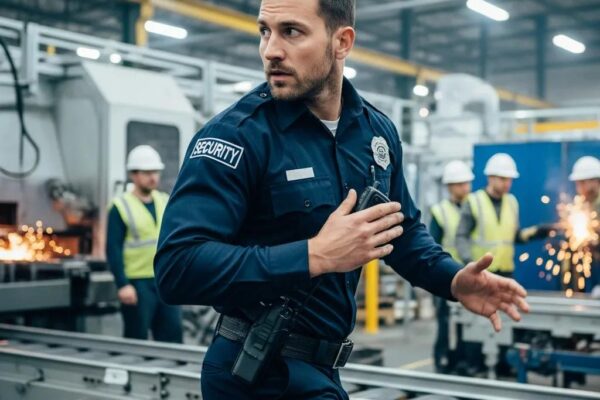
In fast-moving situations — a theft in progress, a machinery failure, or an escalating dispute — guards assess risk immediately and choose the safest outcome. They can secure an area, detain a person, summon medical aid, or coordinate with operations staff within seconds. Automated systems often need time to verify data or await human review; trained personnel close that time gap with decisive action. This decisive action is a hallmark of effective unarmed and armed security services.
How do on-site security guards strengthen physical security in industrial settings?
Having guards on-site complements locks, fences, and cameras with active supervision. Security guards in Dallas provide this essential human element, ensuring rules are enforced and sensitive zones are monitored in real time. Their visibility deters wrongdoing, their experience directs access control, and their presence reassures staff. Rather than replace technology, guards amplify it — enforcing rules, responding to alerts, and keeping sensitive zones monitored in real time.
What role does visible guard presence play in crime deterrence at manufacturing plants?
Visible guards are a proven deterrent. Facilities with on-site personnel, typically see fewer break-ins and less vandalism than those that rely only on remote systems. The immediate knowledge that a trained person is watching — and can intervene — changes the behavior of trespassers and reduces opportunistic crime.
How are access control and mobile patrols effectively managed by trained guards?
Guards handle badge checks, escort visitors, and run scheduled or random mobile patrols to cover blind spots. They can spot unauthorized access, check for tampered locks, and respond to suspicious activity before it escalates. Regular patrols also keep guards familiar with the facility, so they notice small changes that could signal a security risk.
In what ways do security guards adapt and respond to emergencies beyond technological capabilities?
Guards are trained to manage the unpredictable: medical emergencies, chemical spills, equipment failures, and on-site conflicts. Their training emphasizes quick assessment, containment, and coordination with emergency services — skills that automation can support but not fully replace.
How do guards handle unforeseen industrial crises and medical emergencies?
When an incident occurs, guards secure the scene, provide first aid where trained, and activate emergency protocols. They communicate directly with operations and first responders, guide evacuations, and maintain scene control until professionals arrive. That human coordination reduces confusion and limits harm during critical minutes.
What conflict de-escalation techniques do guards use that technology cannot replicate?
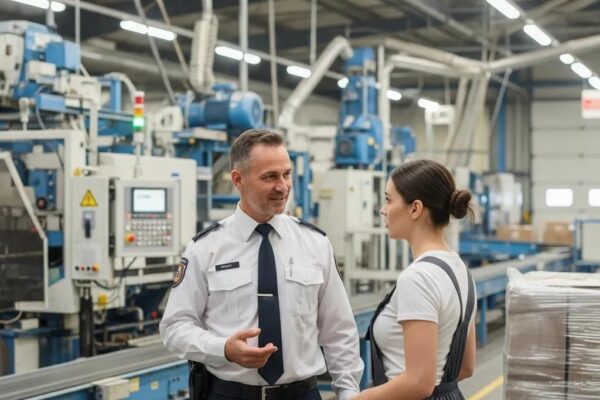
Guards rely on verbal techniques, tone control, and situational empathy to defuse tense encounters. They use clear directions, calm body language, and measured dialogue to lower a situation’s intensity — a human skill set that cameras or alerts cannot provide. These methods preserve safety and help avoid escalation into violence or damage.
How do security guards protect manufacturing-specific assets that technology often misses?
Guards focus on assets that require judgement and context — intellectual property, sensitive designs, and high-value inventory. Their training includes procedures for access, inventory verification, and spotting unusual patterns that suggest internal or external theft.
What strategies do guards use to safeguard intellectual property and high-value inventory?
Guards support asset protection with controlled access, routine audits, and log-keeping of material movements. They work with operations and inventory teams to enforce chain-of-custody practices and flag anomalies, helping prevent diversion or unauthorized copying of proprietary items.
How do guards prevent internal theft and vandalism within factories?
Internal risks are reduced through a mix of visibility, relationship-building, and investigation. Guards encourage a culture of accountability by being present, approachable, and observant. When suspicious behavior appears, they gather evidence, interview witnesses, and escalate findings to supervisors — steps that deter repeat incidents.
Why is integrating security guards with technology the optimal approach for manufacturing security?
A combined model leverages the strengths of both: technology for wide-area detection and recordkeeping, and humans for judgment, context, and action. Many leading Dallas Texas security companies offer such integrated solutions, forming a resilient system that catches more threats and responds faster than either could alone.
How does human oversight enhance the effectiveness of security technology?
Guards interpret camera feeds, prioritize alerts, and investigate anomalies that automated systems flag. Their contextual understanding reduces false alarms, improves incident response, and ensures that technology’s outputs translate into practical, on-the-ground measures.
What are the limitations of security technology that guards compensate for?
Technology can miss subtle cues, suffer outages, or generate false positives. Cameras can be obscured, analytics can misclassify behavior, and alarms can trigger without cause. Guards bridge those gaps by validating events, adapting to failures, and making judgment calls that keep operations safe and secure.
How do security guards contribute to workplace safety and compliance in manufacturing plants?
Guards support safety programs by enforcing protocols, monitoring hazardous zones, and participating in drills. Their vigilance helps keep teams compliant with regulations and reduces the likelihood of accidents through proactive observation and reporting.
What safety protocols do guards enforce to reduce industrial risks?
Guards conduct routine safety checks, confirm that protective equipment is used in restricted areas, and report unsafe conditions. They also reinforce procedural compliance during shift changes and assist in training and emergency preparedness activities to lower overall risk.
How do guards monitor hazardous areas and ensure compliance?
Regular inspections of hazardous zones, verification of access permissions, and clear communication with supervisors are core guard duties. By remaining present and observant, guards help ensure safety controls are followed and that corrective actions occur quickly when issues arise.
| Security Aspect | Human Advantage | Technology Limitation |
|---|---|---|
| Intuition | Reads body language and subtle context to assess intent | Limited emotional and contextual awareness |
| Decision-Making | Adapts in real time during emergencies | Can be delayed by processing or verification steps |
| Conflict Resolution | Uses verbal de-escalation and interpersonal skills | Cannot engage or negotiate directly |
| Asset Protection | Performs proactive monitoring, audits, and investigations | Operates only within programmed parameters |
The table above highlights where trained guards add distinct, practical value compared with automated systems — emphasizing why both are needed for robust plant security.
In short, pairing trained security guards with modern technology delivers the most effective protection for manufacturing plants. Guards provide the judgment, adaptability, and human interaction that machines cannot, while technology extends reach and records events. Together they create a safer, more resilient environment as facilities evolve and face new security challenges.
Frequently Asked Questions
What specific skills do security guards need to effectively manage access control in manufacturing plants?
Guards need strong observation, attention to detail, and clear communication. Security guards in Dallas are often trained to know the facility layout and security protocols, recognize authorized credentials, and spot irregular behavior. Familiarity with electronic access systems is also important so guards can enforce entry rules while supporting daily operations.
How do security guards ensure compliance with safety regulations in manufacturing environments?
Guards support compliance by conducting inspections, reporting hazards, and reinforcing safety procedures. They collaborate with safety officers on training and audits, help run drills, and escalate issues that could lead to regulatory violations — all of which strengthen the facility’s safety posture.
What are the advantages of having security guards conduct regular patrols in manufacturing facilities?
Regular patrols increase visibility, deter unauthorized activity, and enable early detection of problems. Patrols let guards check vulnerable areas, confirm that safety measures are in place, and respond quickly to incidents — reducing the window for damage or theft.
How do security guards assist in emergency preparedness and response in manufacturing plants?
Guards take part in planning, run drills, and help refine response procedures. In an emergency they control access, guide evacuations, provide first response support, and coordinate with emergency services. The availability of armed security services can further enhance emergency response capabilities, ensuring a robust and effective reaction when every minute counts. Their presence helps keep response efforts organized and effective when every minute counts.
What role do security guards play in maintaining a positive workplace culture in manufacturing settings?
Guards contribute to a safe, respectful workplace by being approachable and consistent. When employees trust guards, they are more likely to report safety concerns and cooperate with procedures. Guards who engage constructively with staff help build a culture where safety and accountability are shared values.
How do security guards adapt their strategies to different types of manufacturing environments?
Guards tailor their approach based on the facility’s risks — prioritizing asset protection in high-value plants, or focusing on hazardous-material protocols where needed. They work with management to align patrols, access controls, and emergency plans to each site’s operational realities, ensuring security measures stay practical and effective.