
How mobile patrols cut theft, vandalism, and unauthorized access at manufacturing sites
Written by: Greg Peters – Military Veteran & Owner of International Security Services
Manufacturing facilities face a wide range of security challenges — from opportunistic theft and targeted removal of high-value parts to deliberate vandalism and unauthorized entry that interrupt production. This piece explains how mobile patrol services act as a proactive layer of physical security to limit theft, vandalism, and trespass across factory and plant sites. You’ll get a clear definition of mobile patrols, the specific ways they deter and resolve incidents, the operational and financial advantages they deliver, how to integrate them with CCTV, alarms and access control, and how to evaluate providers for industrial environments. We also cover practical patrol workflows, randomized scheduling approaches, digital reporting standards, and anonymized case examples that show measurable results. We start by defining mobile patrol services and the core protective functions that make them effective on large manufacturing perimeters.
What are mobile patrol services and how do they protect manufacturing sites?
Mobile patrol services are a form of physical security in which trained officers carry out vehicle-based or foot patrols on client property to deter crime, inspect assets and respond to alarms. They combine visible presence with procedural inspections and rapid incident workflows to interrupt criminal opportunity and preserve evidence, which reduces losses and downtime. On industrial sites—where sprawling perimeters, remote yards and after-hours equipment create predictable vulnerabilities—mobile patrol services provide value through mobility, visibility and human verification.
The short list below summarizes the core protective mechanisms mobile patrols deliver and prepares the way for the operational detail in later sections.
- Visible deterrence: uniformed officers and marked vehicles signal active security and discourage opportunistic offenders.
- Proactive inspections: routine checks of gates, loading docks, storage yards and equipment catch anomalies before they become losses.
- Alarm response: dispatched patrols verify alarms, secure scenes and coordinate with law enforcement to limit damage.
- Access enforcement: credential checks and vehicle inspections reduce unauthorized entry and tailgating risks.
Together these functions form a layered presence that reduces criminal opportunity and enables fast, documented action. The next paragraphs explain the personnel roles and scheduling tactics that make those mechanisms effective on industrial properties.
What roles do security officers and patrol vehicles play in industrial security?
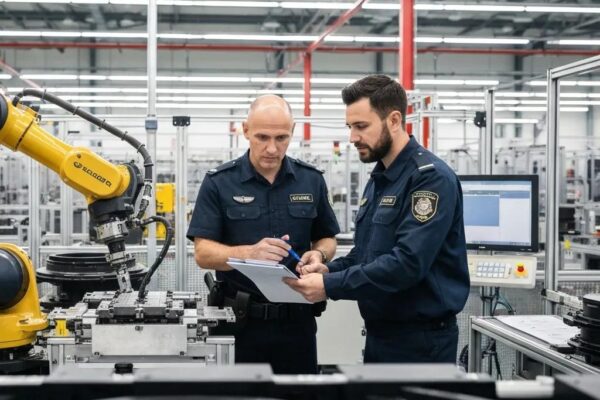
Officers and patrol vehicles together create a mobile deterrence and response capability suited to industrial sites. Officers carry out perimeter sweeps, verify locks and contractor credentials, and record findings in time-stamped digital reports that support investigations and insurance claims. Vehicles extend visibility across large properties, allow rapid relocation to alarm locations, and carry communication and first-response tools officers need to secure scenes until specialized responders arrive. Technology—GPS route tracking, mobile reporting apps and two-way radios—augments officer effectiveness by producing auditable logs and improving dispatch coordination. That foundation leads into how randomized and scheduled patrols work together to strengthen deterrence.
How do scheduled and random patrols enhance crime deterrence?
Scheduled patrols provide predictable coverage that reassures staff and covers routine checkpoints. Randomized patrols break patterns and increase the perceived risk for would-be offenders, amplifying deterrence across the site. Randomization changes visit times, routes and stop durations so patterns can’t be learned by people trying to exploit shift changes or thin staffing windows. For manufacturing operations, scheduling must respect production cycles and delivery timetables so patrols protect vulnerable periods—night shifts, weekend loading or downtimes—without disrupting operations. Pairing visible, predictable presence during busy hours with unpredictable checks during vulnerable windows delivers both reassurance and uncertainty. The following section connects these deterrence methods to concrete reductions in theft, vandalism and unauthorized access.
For context, many security providers include trained officers, marked vehicles, alarm-response dispatch, GPS tracking and digital incident reporting as standard capabilities. This overview sets expectations for security managers evaluating mobile patrol options and prepares you to assess operational benefits and system integration.
How do mobile patrols reduce theft, vandalism and unauthorized access on manufacturing sites?
Mobile patrols lower theft, vandalism and unauthorized entry through a combination of prevention and response: visible deterrence discourages attempts, inspections find vulnerabilities, alarm response limits loss, and access enforcement blocks unauthorized entry. These actions work together — a rapid, documented patrol response can turn an alarm into a confirmed incident and preserve evidence, which deters repeat offenders and reduces insurance exposure. For more information, you can visit our article on why every manufacturing plant in Dallas needs on-site security guards.
Below is a concise summary of the primary mechanisms and short examples of how each reduces incident frequency and severity.
- Visible presence raises the perceived risk of detection, deterring opportunistic and low-skill offenders.
- Timely alarm response shortens the window for theft or vandalism, limiting material loss and production interruptions.
- Access point checks and credential verification stop tailgating and unauthorized vehicle entry that enable theft.
- Documentation and reporting create evidence trails that support investigations and insurance claims and deter repeat offenders.
Visibility usually starts with uniformed officers and marked vehicles, which is why patrol presence is often the first line of defense on large sites. The next subsection explains how visibility works, both psychologically and practically, to reduce crime attempts.
How does visible security presence deter criminal activity?
Visible presence shifts an offender’s cost‑benefit calculation: the risk of detection goes up while the expected ease of committing a theft or act of vandalism goes down, so attempts drop. Practical visibility tactics include marked patrol vehicles, signage that indicates active patrols, strategic daytime checkpoints and nighttime drive-throughs of vulnerable yards. For sites with large outdoor storage or remote structures, visibility combined with random checks makes opportunistic theft and vandalism far less attractive. Visible patrols also reassure workers and encourage reporting and cooperative vigilance. That visibility model naturally leads to how patrols provide rapid incident response when deterrence alone isn’t enough.
Visible patrols — the idea that a uniformed presence reduces crime — is a long-standing principle that underpins modern patrol strategies.
The Deterrent Impact of Visible Police Patrols in Crime Hotspots
The idea that visible police patrols can reduce crime in hotspots is well established and has informed patrol strategy for decades. Numerous academic and practitioner studies document a deterrent effect, though measuring micro-level patrol impacts requires careful methods and reliable data.
Understanding the deterrent effect of police patrol, OK Hutt, 2019
In what ways do mobile patrols provide rapid incident response?
Mobile patrols enable fast incident response through coordinated dispatch workflows that prioritize alarm verification, on-scene assessment and secure containment while notifying law enforcement when needed. Typical protocols begin with alarm receipt and remote triage using CCTV or alarm metadata, followed by a dispatched patrol to verify the situation within a short window. Officers secure the scene, record evidence and hand over to police if criminal activity is confirmed. On-site actions include perimeter containment, witness interviews, temporary scene preservation and photographic, GPS-stamped reports to support investigations and claims. Clear response procedures limit intruders’ time on site and ensure follow-up actions are documented and actionable.
How do mobile patrols enforce access control and prevent unauthorized entry?
Mobile patrols enforce access control by checking gates, barriers and credential systems, cross-referencing access-control logs with observed traffic, and intervening on tailgating or credential anomalies. Officers inspect perimeter integrity, verify contractor and vendor IDs, and note suspicious vehicle descriptions to build corroborating evidence for investigations. When integrated with access-control systems, patrols receive alerts for credential failures or forced entries and prioritize those locations for verification, adding a human validation layer that technology alone can miss. These access-control activities complement CCTV and automated systems by bringing situational judgment and immediate remediation to the scene, which the next section ties to broader operational benefits.
What are the additional benefits of mobile patrol security for manufacturing operations?
Beyond direct crime reduction, mobile patrols deliver operational benefits: scalable coverage across large footprints, improved employee safety during vulnerable hours, and structured digital reporting that supports audits, insurance claims and continuous improvement. Patrols are often more cost-effective than static guarding for sites with wide perimeters or intermittent risk windows because they concentrate resources where and when needed, reducing idle costs while keeping a visible deterrent. Digital incident reports, GPS-tracked routes and standardized logs increase accountability and provide data for risk-management decisions, making patrols a practical part of an industrial security program.
The table below compares common patrol types and the benefits each brings so security managers can match patrol approaches to site risks.
| Patrol Approach | Characteristic | Typical Value for Manufacturing |
|---|---|---|
| Scheduled patrols | Predictable checks at set times | Provides regular assurance and meets compliance checkpoints |
| Randomized patrols | Unpredictable timing and routes | Removes exploitable patterns and increases deterrence |
| Alarm-response patrols | Dispatch-on-alarm verification | Reduces loss through rapid on-scene verification and containment |
Mixing patrol styles creates a balanced program that handles both compliance requirements and opportunistic threats. The next paragraphs dig into cost-effectiveness, employee safety and reporting in more detail.
Key additional benefits are outlined below.
- Scalable coverage lets you increase or reduce patrol frequency with demand, avoiding long-term fixed staffing costs.
- Digital reporting produces auditable evidence trails that support compliance, insurance claims and performance reviews.
- Employee safety improves during shift changes and isolated work hours when patrols provide a visible, responsive presence.
The combination of scalable coverage and structured reporting often yields measurable drops in incident frequency and fewer production interruptions. Many organizations run pilot programs to quantify return on investment before widening patrol coverage.
For teams evaluating options, discuss tailored patrol packages and digital-reporting formats with providers to align mobile patrol capabilities to your budget and operational priorities.
How do mobile patrols offer cost-effective and flexible security solutions?
Mobile patrols deliver cost efficiency by moving active security presence across multiple checkpoints and time windows without requiring full-time static posts at every location, which reduces labor overhead on sprawling properties. Patrols can be scaled up for high-risk periods such as inventory moves and scaled back during low-activity windows, making them flexible for fluctuating operations. They also reduce capital outlay by complementing existing CCTV and access control rather than replacing them, and integrated digital reporting cuts investigative time after incidents, lowering indirect costs. Understanding these trade-offs helps security managers decide whether randomized patrols, scheduled coverage or alarm-response packages best fit site needs.
How do mobile patrols enhance employee safety and operational continuity?
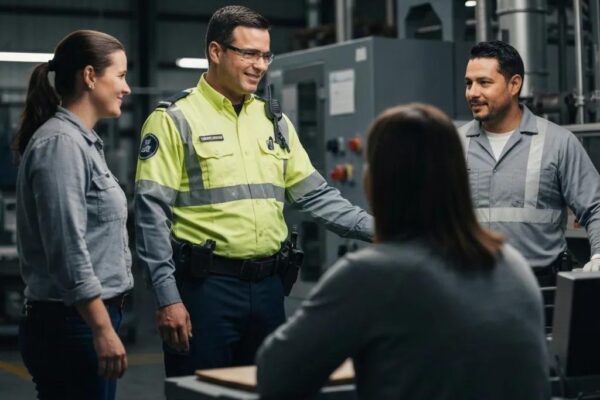
Mobile patrols improve employee safety by providing an active security presence during night shifts, early starts and isolated tasks, reducing workplace harassment, unauthorized entry and incidents that can halt production. Officers trained to spot hazards and coordinate emergency response can secure scenes quickly and liaise with emergency services to minimize downtime and protect workers. Routine patrols also identify unsafe conditions—like damaged fencing, unsecured equipment or lighting failures—that could cause accidents or invite crime. The proactive nature of patrols supports operational continuity by preventing incidents that pause production and by documenting actions taken during disruptive events.
What role does digital reporting and accountability play in mobile patrol services?
Digital reporting and accountability are central to proving patrol effectiveness: GPS-tracked routes, time-stamped incident reports and photographic evidence create verifiable records for investigations, audits and insurance claims. Patrol platforms offer standardized incident templates, automated follow-up alerts and centralized logs managers can analyze to find hotspots and optimize schedules. This documentation enforces officer accountability and enables continuous improvement through performance metrics, reducing recurring vulnerabilities. Because manufacturers increasingly demand measurable outcomes for security investments, digital reporting is often decisive when comparing patrol offerings and negotiating service terms.
Digital tools and algorithms are key to efficient, unpredictable patrol scheduling so offenders cannot exploit predictable patterns.
Digital Patrol Systems for Crime Prevention Utilizing Mobile Computing
Effective environmental security requires comprehensive patrol coverage supported by user-friendly digital tools and coordination with emergency services. To avoid predictable patterns, patrols should be scheduled across distinct routes and times; achieving that reliably often requires an algorithmic approach. One proposed method, Fixed Step Size Random Search (FSSRS), can generate randomized but precise patrol schedules to keep coverage unpredictable and efficient.
Implementation of Random Search Algorithm with FSSRS (Fixed Step Size Random Search) for Applicating the Patrol System Based on Mobile Computing, SR Riady, 2023
How can mobile patrol services be integrated with existing manufacturing security systems?
Mobile patrols integrate with CCTV, alarm systems and access control to create a layered security posture where human verification complements automated monitoring, reduces false positives and adds on-site judgment. Typical workflows include alarm triage that combines remote video checks with dispatched patrols, patrol-triggered camera sweeps to capture evidence, and cross-referencing patrol findings with access logs to spot anomalies. Clear procedural agreements—who responds, what evidence to collect and how to escalate—make these technical integrations operationally effective. The table below maps patrol functions to common site systems with practical integration examples.
| Mobile Patrol Function | Integration Attribute | Integration Example |
|---|---|---|
| Alarm verification | Interaction with alarm panels and monitoring | Dispatch patrol to alarm location after remote CCTV check to verify cause |
| CCTV-assisted checks | Triggering camera sweeps and recording evidence | Patrol requests targeted camera sweep to capture vehicle license and suspect movement |
| Access log correlation | Cross-reference patrol observations with access control events | Patrol notes credential anomaly and flags corresponding access log entry for investigation |
Mapping functions to systems clarifies responsibilities and shows how patrols add human judgment to automated alerts. The next subsection outlines best practices for coordinating with access control.
How do mobile patrols work with CCTV and alarm systems for comprehensive coverage?
Mobile patrols form a verification loop with CCTV and alarm systems: monitoring centers triage alerts with camera feeds, patrols are dispatched to confirm or dismiss alarms, and officers provide physical context and evidence sensors cannot capture. Best practices include agreed verification timeframes, prioritization rules for alarm types and procedures for preserving chain of custody for collected evidence. Patrol-triggered camera sweeps help reconstruct incidents, while on-scene photos and written reports support follow-through. Effective coordination reduces false alarms, prioritizes real threats and ensures patrol resources protect assets efficiently.
What are best practices for combining mobile patrols with access control technologies?
Best practices include routine cross-checks of access logs during patrols, clear procedures for verifying contractor credentials and defined actions for credential anomalies or tailgating. Patrol officers should have read-only access to relevant access-control summaries or receive automated exception alerts so they can investigate in real time. Documented escalation paths—how to lock down zones, detain suspicious individuals and notify operations or law enforcement—should be established and rehearsed with site stakeholders. These procedures create operational clarity that leverages both human judgment and automated evidence to reduce unauthorized entry risk.
How do you choose the right mobile patrol provider for your manufacturing site?
Choosing the right mobile patrol provider means evaluating training standards, technology and reporting capabilities, customization options, liability and insurance coverage, and proven response-time practices to match manufacturing needs. Providers should show how patrol schedules will fit production cycles, what digital-report formats they use and how they coordinate with your CCTV and access-control vendors. Request sample incident reports, GPS patrol logs and outlines of officer training to validate claims and set measurable expectations. The checklist below lists evaluation criteria and the proofs to request when comparing providers.
When evaluating providers, use the following checklist to compare offerings and verify claims:
- Training and qualifications: Confirm officer certifications, emergency response training and site-specific hazard awareness.
- Technology and reporting: Verify GPS-tracked patrols, time-stamped incident reports and data formats compatible with your audits.
- Customization and scheduling: Ensure providers can align patrol frequency and routes with shifts and production cycles.
- Liability and coordination: Ask about insurance limits, escalation procedures and integration with local law enforcement.
The checklist sets minimum expectations to help procurement teams compare bids objectively. Consider pilots or short-term trials to prove fit before committing to long-term contracts.
| Evaluation Area | Key Attribute | What to Ask/Verify |
|---|---|---|
| Training | Officer qualifications and site training | Request training summaries, certificates and the option for a ride‑along demonstration |
| Technology | Reporting and tracking capabilities | Ask for sample digital reports, GPS trail exports and data formats for audits |
| Coverage | Patrol frequency and response procedures | Verify proposed schedules, alarm-response SLA language and escalation paths |
These verification steps support a disciplined vendor selection process focused on demonstrable capability. Consult providers for custom quotes and pilot programs to prove fit before committing to long-term contracts.
What training and qualifications should security officers have?
Officers assigned to manufacturing sites should be trained in perimeter checks, industrial hazard awareness, incident documentation and de-escalation and emergency response protocols relevant to plant environments. Ask for certificates for basic security training, evidence of supplemental industrial safety courses and the opportunity for a ride‑along or supervised demonstration to observe procedures in practice. Officers familiar with access-control systems, hazardous-material awareness and evidence preservation will perform more effectively in complex settings. Verifying these qualifications reduces operational risk and ensures patrols act as competent first responders who protect assets and people.
How can mobile patrol services be customized to meet specific manufacturing security needs?
Mobile patrols can be tailored with custom frequencies, route designs that focus on high-value storage or remote yards, alignment with shift changes and logistics schedules, and specific checklists for critical equipment inspections. A formal site survey should identify hotspots, scheduling constraints and integration points with CCTV and access control so patrol plans minimize production impact while maximizing risk reduction. Custom options may include targeted after‑hours sweeps, contractor-entry verifications and coordinated lockdown drills with operations staff. Scoping these elements during an initial risk assessment creates a defensible plan that can be piloted and refined using patrol data and incident metrics.
What are real-world examples of mobile patrol success in reducing manufacturing site security risks?
Anonymized case examples and lessons learned show how mobile patrols reduce incidents and strengthen operational resilience when deployed with clear workflows and measurable reporting. Vignettes commonly show fewer break‑ins after randomized patrol schedules were introduced, reductions in vandalism following visible nighttime drive‑throughs, and faster incident resolution when patrols were integrated with alarm verification and CCTV. The key to success is combining human patrol judgment with technology and measuring outcomes such as incidents per month, average response times and cost savings from prevented losses. The subsection below summarizes typical before/after results and the tactics most associated with positive outcomes.
How have mobile patrols reduced theft and vandalism in industrial facilities?
Across many anonymized examples, sites that implemented a mix of randomized patrols, alarm-response dispatch and focused asset checks reported measurable declines in theft and vandalism over subsequent months, tracked as fewer incidents and lower loss values. Effective tactics include increasing unpredictable coverage during known vulnerability windows, targeted checks of outdoor storage and loading bays, and ensuring every alarm dispatch produces a documented verification report. These practices deter repeat offenders and speed investigative follow-up, delivering cost avoidance tied to prevented theft and reduced operational disruption. Consistent reporting frameworks and baseline incident tracking are required to attribute improvements to patrol interventions.
What lessons can be learned from manufacturing site security case studies?
Key lessons emphasize adaptability, measurement and human-plus-technology integration: begin with a site survey to prioritize risks, pilot mixed patrol styles and collect digital reports to quantify impact, and iterate schedules based on incident trends and operational calendars. Additional takeaways include establishing clear escalation protocols with local law enforcement, investing in officer training for industrial hazards, and aligning patrol visibility so security does not impede production. Running pilot programs with defined KPIs and periodic reviews creates a feedback loop that refines patrol effectiveness and supports further investment in mobile security as part of an overall industrial strategy.
Frequently Asked Questions
What are the key differences between mobile patrols and static security guards?
Mobile patrols move through the property; static guards stay at a single post. That mobility gives patrols broader coverage of large sites, faster response to incidents and the ability to inspect multiple areas in one shift. Static guards are useful at fixed control points; mobile patrols are more flexible for sprawling or intermittently vulnerable sites, since routes and schedules can be adapted to address specific risks.
How can mobile patrols improve employee morale and safety?
A visible, active patrol presence reassures staff and reduces anxiety—especially during night shifts or when workers are isolated. Knowing trained officers are monitoring the site encourages reporting of suspicious activity and gives employees a reliable first responder for emergencies. That combination of deterrence and support improves both morale and safety.
What technology is commonly used in mobile patrol services?
Common technology includes GPS tracking for route verification, mobile reporting apps for real-time incident documentation, and two-way radios for officer communication. Integration with CCTV and alarm systems lets patrols verify incidents quickly. These tools increase operational efficiency and provide data for analyzing trends and optimizing security coverage.
How do mobile patrols handle emergency situations?
Patrols follow established emergency protocols: on alarm or observed suspicious activity, officers use available technology—CCTV feeds, radio and mobile apps—to assess the situation, secure the area, document evidence and coordinate with local law enforcement or emergency services as required. This structured approach minimizes response times and helps contain incidents, protecting people and assets. For more information, visit International Security Services.
What factors should be considered when evaluating mobile patrol providers?
Evaluate training standards and officer experience in industrial settings, technology and reporting capabilities, customization options to match your operations, and liability and insurance coverage. Also verify response-time practices and how the provider coordinates with your CCTV and access-control vendors. These factors ensure the provider can meet your specific security needs.
Can mobile patrols be integrated with existing security systems?
Yes. Mobile patrols work with CCTV and access control to form a layered security approach: patrols verify alarms, monitor access points and document incidents in real time. Combining human oversight with automated systems reduces false alarms and improves response efficiency. Clear communication protocols and agreed workflows are essential for successful integration.