
Why On-Site Security Guards Are Essential for Modern Healthcare Facilities: Ensuring Safety and Compliance
Written by: Greg Peters – Military Veteran & Owner of International Security Services
Today’s healthcare environments face complex safety, privacy, and operational risks. Trained, on-site security guards are a frontline solution: they protect patients and staff, safeguard sensitive data, and help facilities meet regulatory obligations. This article outlines the core duties of healthcare security personnel, the tangible benefits they deliver, the training and certification standards that support their work, and real-world lessons from Dallas-area facilities.
What Roles Do On-Site Security Guards Play in Healthcare Facilities?
Security officers in medical settings perform practical, mission-critical tasks that keep operations running and people safe. Day-to-day responsibilities typically include monitoring property, controlling access to clinical and administrative areas, and responding immediately to incidents. A visible, professional security presence also deters misconduct and supports a stable care environment.
How Do Security Guards Protect Patients and Staff?
Guards protect patients and staff through deterrence, surveillance, and rapid intervention. They maintain situational awareness across entrances, waiting areas, and high‑risk zones; escalate suspicious activity; and coordinate with clinicians and first responders when incidents occur. This proactive posture prevents many issues from escalating and preserves a safe care setting for delivery of services.
What Access Control Measures Do Healthcare Security Guards Implement?
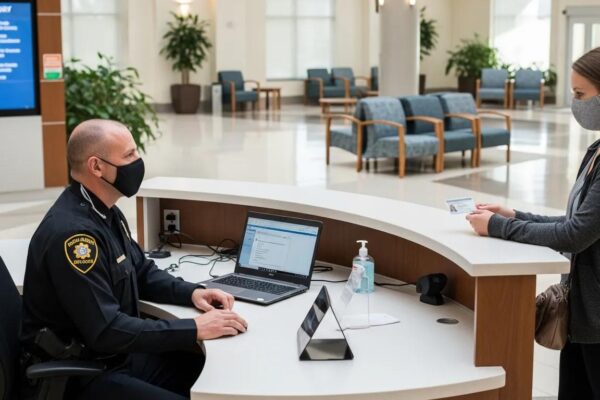
Access control is a cornerstone of healthcare security. Common measures implemented by guards include:
- Identification checks: Verifying IDs for staff, vendors, and visitors at entry points.
- Visitor management: Logging guests, issuing badges, and arranging escorts when needed.
- Restricted-area enforcement: Controlling entry to sensitive zones such as records rooms, pharmacies, and secure clinics.
These practices protect patient privacy, reduce theft risk, and help maintain compliance with institutional policies and legal requirements.
How Do On-Site Security Guards Enhance Patient and Staff Safety?
The regular presence of trained security personnel raises the overall safety baseline in healthcare settings. By preventing theft, defusing conflicts, and responding to emergencies, security teams reduce disruptions so clinical staff can focus on care. Their interventions build trust among patients and employees, contributing to a calmer, more focused care environment.
In What Ways Do Guards Deter Violence and Theft in Hospitals?
A visible security presence discourages opportunistic theft and many violent acts. Guards are trained in incident reporting, de-escalation techniques, and coordinated response procedures with local law enforcement. When threats do arise, documented protocols and timely action limit harm and speed resolution, reinforcing a culture of safety across the facility.
Conducting comprehensive security assessments helps identify vulnerabilities and strengthens defenses against theft, violence, and targeted attacks.
Hospital Security Assessment for Patient & Employee Safety
The study developed a practical assessment tool to evaluate hospital security measures and guide improvements. The checklist helps hospitals uncover weaknesses in their security programs and implement changes to deter criminal acts and mitigate risks, including potential terrorist threats. Using these tools supports stronger campus protection and better preparedness.
Hospital security and force protection: A guide to ensuring patient and employee safety, 2006
How Do Security Guards Support Compliance with Healthcare Regulations?
Healthcare security staff play a direct role in regulatory compliance. They document incidents, follow recordkeeping protocols, and operate within established privacy and safety rules. By staying current on applicable laws and institutional policies, guards help reduce legal exposure for the facility and ensure safety practices meet regulatory expectations.
Evidence consistently shows that aligning security practices with regulatory guidance improves overall safety and operational compliance in healthcare settings.
What Training and Certifications Are Required for Healthcare Security Guards?
Effective healthcare security depends on targeted training and certifiable skills. Typical requirements include foundational security training, emergency response and incident management, and formal instruction on relevant healthcare laws and privacy protections.
Which Emergency Response Skills Are Essential for Hospital Security Personnel?
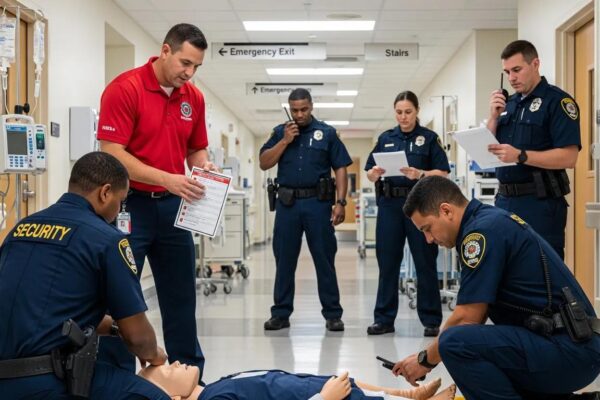
Key emergency response competencies include:
- First aid and CPR certification: Allowing guards to provide immediate care when clinicians are not immediately available.
- Crisis and incident management: Structured training for high-stress scenarios and coordinated action plans.
- Clear communication: Skills to direct staff, patients, and responders effectively during an emergency.
These capabilities enable security personnel to act decisively, stabilize situations, and support clinical teams until specialized responders arrive.
In extreme events—such as an active shooter—the rapid, coordinated actions of trained security staff are critical for protecting lives and guiding law enforcement intervention.
Security Personnel Role in Hospital Active Shooter Response
The scenario describes a protocol where the hospital operator dispatches a security officer to assess an incident. If security confirms an active shooter, police are notified immediately. This structured response underscores the importance of predefined roles and clear handoffs between security and law enforcement.
Active shooter in the emergency department: a scenario-based training approach for healthcare workers, RJ Louden, 2014
How Does Ongoing Training Improve Security Guard Effectiveness in Medical Facilities?
Continuous training—regular drills, policy refreshers, and updates on legal changes—keeps security teams ready for evolving threats. Routine practice hones response timing, reinforces coordination with hospital staff and first responders, and ensures staff apply the latest best practices in real situations.
Why Are Local Dallas Case Studies Important for Understanding Healthcare Security?
Local case studies ground best practices in real operational contexts. Examining Dallas-area examples reveals practical challenges hospitals encounter and the solutions that have proven effective in reducing incidents and improving response times.
What Success Stories Demonstrate Effective Security Guard Deployment in Dallas Hospitals?
Across Dallas hospitals, several facilities report measurable improvements after strengthening security programs—fewer thefts, faster incident resolution, and improved staff confidence. Common successful actions include increasing guard coverage at key points, tightening access controls, and enhancing visitor screening procedures.
How Do Dallas Healthcare Facilities Integrate Security Guards with Emergency Protocols?
Dallas facilities typically embed security staff in emergency planning: officers train with local police and EMS, participate in active-shooter and disaster drills, and follow coordinated response protocols. That integration ensures security personnel understand their roles, improve interagency communication, and act consistently under pressure.
Frequently Asked Questions
What are the key benefits of having on-site security guards in healthcare facilities?
On-site guards deliver clear operational benefits: enhanced safety for patients and staff, protection of sensitive records and medications, and support for regulatory compliance. Their presence deters crime, enables faster incident response, and helps maintain a calm environment so clinical teams can focus on care.
How do security guards handle emergency situations in healthcare settings?
Security officers are trained to assess and stabilize emergencies, provide basic medical aid when appropriate, de-escalate conflicts, and coordinate with clinical teams and local emergency services. Their role is to secure the scene, protect patients and staff, and ensure a smooth handoff to medical or law enforcement professionals.
What role do security guards play in protecting patient confidentiality?
Guards enforce access policies for records rooms, server closets, and treatment areas; monitor visitor movements; and verify credentials at entry points. Those measures reduce unauthorized access to protected health information and help facilities meet obligations under laws such as HIPAA.
How can healthcare facilities assess the effectiveness of their security measures?
Facilities evaluate security through scheduled audits, incident-report analysis, response-time tracking, and feedback from staff and patients. Using standardized assessment tools and follow-up action plans helps identify gaps and prioritize improvements.
What are the legal implications of inadequate security in healthcare facilities?
Poor security can expose a facility to legal liability, regulatory fines, and reputational harm if a preventable incident causes patient or staff injury or a data breach. Compliance with safety and privacy standards mitigates these risks and demonstrates due diligence.
How do security guards contribute to a positive patient experience?
Security staff help patients feel safe and supported by maintaining orderly entrances, providing clear directions, and responding calmly to concerns. That stability reduces anxiety for patients and families and allows clinical teams to deliver better care.